If you’ve ever worked in a clean room—say, in semiconductor manufacturing, pharmaceutical production, or even precision medical device assembly—you know how strict the rules are. No dust, no static, no rogue particles messing with processes that cost millions, or endangering people. And if you’re like most folks hanging around these spaces, you probably have questions about every piece of gear you sit on. That’s where we come in: we’re an ESD chair supplier, and one of the most common questions we get is, “Can ESD chairs even be used in clean rooms?” Let’s break this down like we would with a customer standing in our warehouse, no fancy jargon, no beating around the bush. ESD Chairs
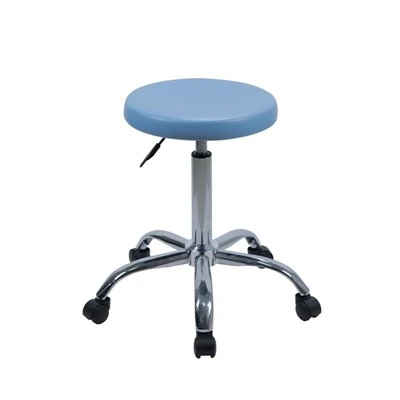
First, let’s get the two key terms straight because mixing them up is where half the confusion starts. ESD stands for Electrostatic Discharge—that tiny, invisible spark you get when you shuffle your feet on carpet and touch a doorknob. In a clean room, that spark is a disaster. A 10-volt static discharge can ruin a microchip worth thousands; a tiny spark could ignite flammable solvents used in drug formulation. ESD chairs are built to stop that static from building up, right? But clean rooms have their own rules—classifications for how many particles per cubic meter are allowed, strict surface smoothness, no porous materials that trap dust. So they’re not the same, but they do play nice when matched correctly.
Here’s the thing: not all ESD chairs are made equal, and not all clean rooms are identical. A Class 100 clean room (old terminology, now ISO 14644-1 Class 5) for semiconductor wafer fabrication has way stricter particle limits than a Class 10,000 (ISO Class 7) for general assembly. If you grab a random ESD chair off Amazon and plop it in a Class 5 clean room, it’s going to fail hard. But a purpose-built ESD chair designed for clean room use? That’s a different story. Let’s talk about the specifics that matter here.
The first big one is materials. Regular ESD chairs might use foam padding covered in vinyl, which is cheap, flexible, and great for dissipating static. But vinyl can outgas tiny volatile compounds, and foam is porous—it traps dust particles that will slowly leach into the clean room air over time. Clean room ESD chairs skip that. We use solid, non-porous, seamless surfaces like grade 316L stainless steel, food-grade polycarbonate, or high-density polyethylene (HDPE) that’s been specifically validated to not shed particles. No gaps, no seams where dust can hide, easy to wipe down with clean room-grade disinfectants (no fancy chemicals that leave residue either). Even the casters—we use static-dissipating polyurethane casters, not hard plastic, because hard plastic can leave scuff marks that count as particles. And if you need mobility, they’re rated to roll without dragging dust behind them.
Next, the ESD functionality itself. This is non-negotiable. Regular office ESD chairs might have a metal base and a ground cord, but that ground path has to meet clean room standards, not just basic ESD requirements. Clean rooms need a consistent discharge path that doesn’t build up a surface charge above 100 volts, per ISO 14644-1 and ANSI/ESD S20.20, the two main standards for these spaces. Our clean room ESD chairs are built with a continuous, unbroken static-dissipative path: the seat, backrest, base, casters, and even the pneumatic lift all work together to bleed static to ground without any breaks. We don’t use metal fasteners that can rust or corrode over time, either—corrosion creates particle debris and breaks the ESD path, so we use static-dissipative polymer fasteners or passivated stainless steel that’s been tested for clean room use.
Wait, what about the ground connection? Some clean rooms require equipment to be grounded at a specific resistance range (usually 1 x 10^6 to 1 x 10^9 ohms, if you’re curious). A clean room ESD chair’s ground cord isn’t just a generic power cord—we test each cord to make sure it falls right in that range, no drifts due to temperature or cleaning chemicals. And if the clean room is a “floating ground” system (some high-sensitivity spaces use this to avoid ground loops), we make sure our chairs are compatible, no stray currents messing with sensitive equipment.
Now, let’s get real about common pitfalls. We’ve seen customers buy a cheap ESD chair for their general assembly area, then try to move it into a pharmaceutical clean room and get rejected during a routine audit. Why? Because those cheap chairs have gaps between the seat and backrest where dust can get trapped, or their casters shed tiny plastic particles that don’t show up on a quick visual check but get picked up by particle counters. Another mistake: using a chair that’s not cleaned for clean room use. We offer a pre-qualified cleaning service where we wipe every part with clean room-approved solvents, then seal the chair in a static-free bag for delivery, so it doesn’t pick up dust during transit. Regular ESD chairs don’t get that treatment, so even if their materials are okay, they’re not ready for a clean room right out of the box.
What about different clean room types? Let’s cover a few examples to make this concrete. If you work in a biopharma clean room where you handle injectable drugs, you need a chair that’s not just ESD-safe but also bacteria-resistant. Our clean room ESD chairs are non-porous, so you can wipe them down with hospital-grade disinfectants (even bleach, in some cases) without scratching or outgassing. That’s a big win because you don’t want bacteria building up in chair crevices. For semiconductor clean rooms, which handle microchips sensitive to even tiny static charges, we have chairs that are also classified as “low-particulating ESD chairs” so they meet ISO Class 5 or higher particle standards. We even have options for static-sensitive workstations where you need to sit and work on tiny parts all day—our chairs have adjustable seat height and back support that don’t require any cloth padding, so no lint or fabric particles getting into your workspace.
Wait, what about people’s comfort? A lot of folks assume ESD chairs for clean rooms are stiff and uncomfortable, like sitting on a metal stool all day. No way. We design our clean room ESD chairs with ergonomic curves, even without foam padding. The polycarbonate and HDPE materials are flexible enough to contour to your body, but not so soft that they trap dust. We also have adjustable armrests that are smooth, no sharp edges, so you can lean back or shift positions without worrying about catching fabric or shedding particles. Comfort is a big deal—if employees are uncomfortable, they slouch, or shift more, which can create static or stir up dust. So we don’t skimp on ergonomics, even for clean room use.
Another common question: can you use a regular ESD chair in a low-grade clean room, like a Class 10,000 (ISO Class 7)? Maybe, but you have to test it first. The foam padding on regular ESD chairs might shed a few particles, which is acceptable for a lower-grade space, but the vendor’s warranty might not cover clean room use, so if you get audited and fail, that’s on you. We always recommend going with a chair that’s explicitly labeled for clean rooms, even if your space isn’t the strictest yet, because if you upgrade your clean room later, you don’t have to replace the chairs. It’s a one-time investment that saves you hassle down the line.
What about maintenance? ESD chairs in clean rooms need basic upkeep, same as any other gear. You have to test the ESD path every six months (or as per your clean room’s audit schedule) to make sure the resistance is still in spec, and wipe the chair down daily or weekly with approved cleaners. Our clean room ESD chairs are designed to be easy to take apart for deep cleaning if needed, no small parts that get lost, and we offer quick guides for testing so your team doesn’t have to call an electrician every time.
Let’s talk about a real example. Last year, a mid-sized medical device manufacturer reached out to us because their current ESD chairs were failing particle counts during their annual FDA audit. They were using standard ESD chairs with vinyl seats, which were shedding tiny plastic particles that were landing on their implantable device components. We swapped out their old chairs for our clean room-certified ESD chairs—seamless HDPE seats, static-dissipating casters, ground cords tested for clean room resistance. After installing them, their particle counts dropped by 98%, and they passed the audit on the first try. The best part? Their team said the chairs were actually more comfortable than the old ones, so there was no pushback from employees about switching. That’s the sweet spot: ESD functionality, clean room compliance, and actual usability for the people sitting in them all day.
So to circle back to the original question: Can ESD chairs be used in clean rooms? The short answer is yes, but only if they’re purpose-built for clean rooms, not just regular ESD chairs rebranded for the space. You can’t take a cheap office ESD chair and call it a clean room chair, but when you pick a chair that’s tested for low particulation, has a continuous ESD path, uses non-porous, easy-to-clean materials, and meets the relevant ISO and ESD standards, it’s not just allowed—it’s required, in most cases, for clean rooms handling static-sensitive or particle-sensitive products.
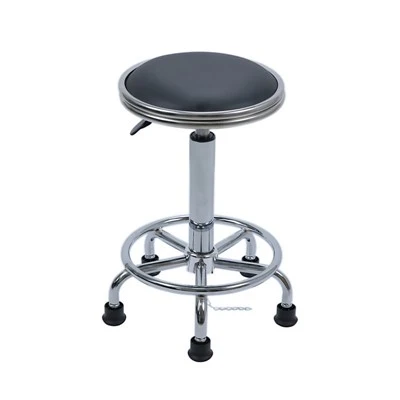
At the end of the day, clean rooms aren’t about being overly strict—they’re about protecting products that are life-saving or worth millions, and protecting the people who work with them. ESD chairs are a small part of that, but they’re a critical one. If you’re outfitting a new clean room, upgrading existing chairs, or dealing with audit failures from bad gear, we’ve got you covered. We build and supply ESD chairs specifically designed for all clean room classes, from ISO 7 down to ISO 5, with every test and validation you need to pass your next audit. Our team knows the ins and outs of ESD and clean room standards, so we can help you pick the right chair for your space, no guesswork. If you want to chat more about what works for your facility, reach out to our team to discuss your needs and get tailored recommendations. No sales fluff, just honest advice and gear that actually does what it’s supposed to.
ESD Chairs References
ANSI/ESD S20.20-2021, ESD Association, "Protection of Electrical and Electronic Items from Electrostatic Discharge"
ISO 14644-1:2015, International Organization for Standardization, "Cleanrooms and associated controlled environments – Part 1: Classification of air cleanliness by particle concentration"
ISO 14644-5:2004, International Organization for Standardization, "Cleanrooms and associated controlled environments – Part 5: Operations and procedures"
FDA 21 CFR Part 211, U.S. Food and Drug Administration, "Current Good Manufacturing Practice for Finished Pharmaceuticals"
Mingqi Anti-Static Technology (Dongguan) Co., Ltd.
Mingqi Anti-Static Technology (Dongguan) Co., Ltd. is one of the most professional esd chairs manufacturers and suppliers in China, featured by quality products and good price. Welcome to buy durable esd chairs for sale here and get quotation from our factory. We also accept customized orders.
Address: Room 103, Building 2, No.5, Chuangye Road, Gaobu Town, Dongguan City, Guangdong Province
E-mail: qiuhaiyang94@gmail.com
WebSite: https://www.mingqiesdchair.com/
