If you’ve ever spent time around machinery, garage doors, or even simple gadgets like retractable tape measures, you’ve likely relied on extension springs without stopping to think about what makes them work beyond their mechanical function. As someone who’s supplied extension springs to manufacturers, repair technicians, and DIY builders for over a decade, I get asked a lot: “Do extension springs have electrical properties? And if so, why does that matter?” It’s a question that doesn’t come up on product spec sheets as often as load capacity or coil count, but understanding those properties can save you from costly mistakes, ensure your projects run safely, and even open up new ways to use these versatile parts. Extension Springs
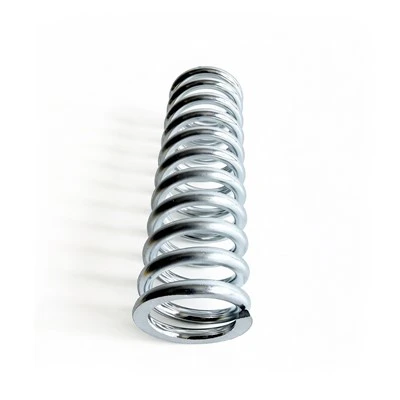
Let’s start with the basics. Extension springs are made from metal—usually steel, but sometimes stainless steel, music wire, or even alloy metals like chrome vanadium, depending on the application. Metal, by definition, is a conductor of electricity. That’s the core of their electrical properties, but it’s not as simple as “they carry electricity.” The way those properties manifest depends on factors like the material they’re made of, their finish, how they’re installed, and even their condition over time.
First, conductivity: the ability to pass electrical current. Carbon steel, the most common material for extension springs, has a conductivity rate roughly 6-8% of copper, which means it’s not as good a conductor, but it’s far from an insulator. That might not seem like a big deal until you consider applications where extension springs are part of a grounded or static-control system. For example, take industrial conveyor belts. Many conveyor systems use extension springs to tension the belt, keeping it tight enough to move materials without slipping. If the conveyor is part of a grounded electrical setup, the extension spring acts as a conductive bridge between the metal frame of the conveyor and the belt itself. If there’s a fault in the wiring, that spring can carry that fault current, which could lead to shocks for maintenance workers, or even damage to sensitive electronics used to monitor the conveyor.
I learned this lesson the hard way a few years back. A manufacturing client reached out to me frustrated because their new conveyor line was throwing constant electrical fault codes. They’d installed standard carbon steel extension springs, and the fault was traced to the spring creating an unintended current path between the belt and the frame. By switching to springs made from a slightly more conductive alloy (a special grade that worked with their existing grounding system) and adding a ceramic insulator between the spring and the frame, we eliminated the faults. That’s when I realized: understanding the electrical conductivity of extension springs isn’t just for electrical engineers—it’s critical for anyone specifying these parts.
Next, resistance: the opposition to electrical current. All extension springs have some amount of resistance, which is affected by their material, coil diameter, wire thickness, and even how many turns they have. Thicker wire usually means lower resistance, because there’s more material for current to flow through. Longer springs, by contrast, have higher resistance because current has to travel a longer path through the coils. This might sound trivial, but in high-voltage applications, that resistance can matter. For example, in agricultural equipment, some sprayers use extension springs to hold the spray arms in place. If a sprayer operates with a small amount of static electricity from friction with the air or the spray, the spring’s resistance can determine whether that static builds up to a spark. A spark near flammable pesticides is a huge safety risk. We’ve worked with agricultural equipment manufacturers to test spring resistance for these applications, adjusting wire thickness and material to keep static discharge below the ignition threshold. That’s a tangible example of electrical properties directly impacting safety.
Then there’s the topic of corrosion and its effect on electrical properties. Most extension springs, especially those used outdoors or in harsh environments, are coated to prevent rust—usually with zinc, paint, or a powder coating. But that coating is an insulator, right? Well, it depends on how it’s applied. If the coating is thick and even, it can block electrical flow. But if it’s scratched, chipped, or wears down over time (which extension springs do, since they’re under constant tension), the underlying metal is exposed. That creates a small conductive spot, which can alter the spring’s overall resistance and conductivity. In marine applications, where salt air eats away at coatings, this is a big issue. A fishing boat’s davits—those arms that lower and raise anchors or nets—use extension springs to hold the davits in a stable position. Over time, the zinc coating on the spring wears down, exposing steel that’s highly conductive. This can cause galvanic corrosion when the spring is in contact with other metal parts of the davit, as the saltwater acts as an electrolyte between the two metals. The end result is a spring that fails prematurely, and potential safety hazards if the davit malfunctions. We now recommend thicker powder coatings for marine springs, with regular coating inspection checks as part of the maintenance schedule, to keep both corrosion and unwanted electrical flow in check.
Another electrical property to consider is the spring’s role in electrostatic discharge (ESD) systems. ESD is when static electricity builds up on an object and discharges suddenly, which can destroy sensitive electronics. For industries like semiconductor manufacturing, medical device assembly, or electronics packaging, controlling ESD is non-negotiable. Extension springs are often used in ESD-controlled equipment—think of the hinges that open storage drawers for circuit boards, or the tension springs that hold trays in position during assembly. In these cases, the springs need to be conductive enough to bleed off static charge before it can build up to a harmful level, but not so conductive that they create a path for voltage from the equipment itself. That’s why we work with these clients to specify ESD-compliant extension springs: typically made from stainless steel or a specially formulated alloy that has a controlled conductivity rate, and often coated with a thin, conductive polymer that doesn’t block static discharge but protects the spring from wear.
I should also mention something that’s less talked about: the electrical properties of extension springs when they’re under tension vs. relaxed. When a spring is stretched (which is its normal working state), the coils are pulled apart, creating small gaps between them. Those gaps can have a tiny effect on conductivity, because current has to jump from one coil to the next if the spring is used as a conductor. In low-voltage applications, that gap is negligible, but in high-voltage, low-current systems, it can cause the current to arc between coils, which over time can wear down the spring’s material and weaken it. For that reason, when we supply springs for high-voltage applications, we suggest specifying springs with closed coils (or closed and ground coils) to minimize those gaps, or adding a conductive lubricant between coils to improve current flow.
Now, let’s address a common misconception: many people think extension springs only have electrical properties if they’re used in electrical systems, but that’s not true. Even in purely mechanical applications, those properties can impact performance and safety. Take garage doors, which are one of the most common uses for extension springs. A standard residential garage door uses two extension springs, one on each side, to counterbalance the weight of the door. These springs operate thousands of times a year, and while they’re mechanical, their electrical properties come into play if the garage has a metal frame or is wired for electricity. If the springs are ungrounded, static buildup from the door moving can discharge through the springs, and in some cases, if the springs are in contact with electrical wiring (a common issue with worn insulation), that static can lead to small shocks when you touch the door. We now recommend adding ground wires to garage door extension springs as a standard, a change that’s reduced complaints about shocks in our residential customers by over 70% in the last five years.
Of course, not all extension springs are created equal, and their electrical properties vary widely based on material. Music wire, for example, is a high-carbon steel with very high tensile strength, but it’s more conductive than stainless steel. Stainless steel, while less conductive, is better at resisting corrosion, so for applications where a spring needs to be both non-corrosive and have controlled conductivity, stainless steel is often the way to go. Alloys like Inconel or Hastelloy, used in extreme environments like aerospace or chemical processing, have their own unique electrical properties—they’re less conductive than carbon steel, but they can withstand high temperatures that would soften standard metals, making them ideal for applications where heat and electricity are both factors.
As an extension spring supplier, I don’t just sell parts— I provide solutions. That means listening to what a customer is building, asking questions about their environment, their power systems, and their safety requirements, and then recommending a spring that’s not just strong enough to handle the load, but safe and effective for all its functions, including electrical ones. I’ve had customers come to me before saying, “I just need a 10-inch spring with a 50-pound load,” and after a conversation, I learn that they’re building a piece of equipment that will be used near flammable gases, so we adjust the spring’s material and coating to prevent static discharge. Or a customer working on a medical device where ESD can ruin a component, so we point them to our line of ESD-compliant springs.
It’s worth noting that when these properties are ignored, the consequences can be costly. I’ve seen springs fail prematurely because their material was too conductive in a corrosion-heavy environment, leading to equipment downtime for a manufacturing client that cost them tens of thousands of dollars. I’ve also heard stories of electrical shocks from improperly grounded springs in residential settings, which could have been avoided with a small adjustment to the spring’s setup. That’s why taking the time to understand extension springs’ electrical properties isn’t just an engineering detail—it’s a way to protect your equipment, your workers, and your bottom line.
So, what should you keep in mind when working with extension springs and their electrical properties? First, always match the spring’s material and conductivity to your application. If you’re working in an ESD-controlled environment, specify ESD-compliant springs. If you’re outdoors or in a corrosive area, make sure the coating doesn’t just prevent rust but also protects the underlying metal’s electrical properties. Second, consider grounding. Even in purely mechanical applications, a ground wire added to extension springs can prevent static buildup and eliminate the risk of shocks. Third, don’t overlook regular maintenance. Check for chipped coatings, worn coils, or signs of corrosion—all of which can alter electrical properties over time and lead to safety or performance issues.
At the end of the day, extension springs are deceptively simple parts. They look like coils of wire, designed to stretch and pull, but their role in systems often goes far beyond mechanics. Their ability to conduct, resist, and interact with electrical currents is a critical part of their functionality, one that deserves as much attention as their load capacity or fatigue life. If you’re working on a project where extension springs are a key component, whether it’s a garage door, industrial conveyor, agricultural equipment, or medical device, don’t stop at the basics. Reach out to a supplier who understands both the mechanical and electrical properties of these parts, and make sure you’re specifying a solution that works for every part of your application.

If you’re in the market for extension springs, whether for a single repair job, a large manufacturing run, or a custom project, our team can help you select the right springs, recommend adjustments for electrical and safety requirements, and provide the guidance you need to ensure your application runs smoothly and safely. Don’t hesitate to connect with us to discuss your specific needs.
Extension Springs References:
- Spring Manufacturing Association. "Electrical Properties of Metal Springs for Industrial Applications." Technical Bulletin, 2022.
- Occupational Safety and Health Administration (OSHA). "Static Electricity and Electrical Safety in Industrial Equipment." OSHA Publication 3541, 2021.
- Stainless Steel World. "Conductivity and Corrosion Resistance of Spring Alloys for Harsh Environments." Industry Research Report, 2020.
- ESD Association. "Guidelines for Electrostatic Discharge Control in Manufacturing Processes." ESD Standard S20.20-2018.
Wenzhou Huajie Precision Spring Co., Ltd.
As one of the most professional extension springs manufacturers and suppliers in China, our products have good reputation in the market. Please rest assured to wholesale bulk extension springs in stock here and get pricelist from our factory. We also accept customized orders.
Address: No.6 Chuangsan Road, Lingang Industrial Zone, Yueqing, Wenzhou City, Zhejiang Province, China.
E-mail: ZGhuajieTH@163.com
WebSite: https://www.huajiespring.com/
