If you’ve ever stood in a drugstore or beauty boutique staring at a shelf of new skincare launches, I’ll wager you’ve paused not just at the active ingredients listed on the back, but at the bottle, tube, or jar holding them too. For over a decade, I’ve run a small, family-owned cosmetic packaging supply business—we don’t churn out cheap, disposable plastics by the truckload; instead, we work with indie beauty brands and clean beauty lines that care as much about how their products look and feel as what’s inside. In that time, I’ve learned that packaging innovation isn’t just about making a pretty container. It’s a minefield of technical hurdles, regulatory hoops, and shifting consumer expectations that feel impossible to navigate sometimes. Today, I want to pull back the curtain on the real, day-to-day challenges we face as packaging suppliers when we set out to create something new, and why so many great product ideas never make it to store shelves because their packaging just can’t keep up. Cosmetic Packaging

Let’s start with the big one: sustainability. That’s not just a buzzword for beauty brands—it’s non-negotiable now. Every client that walks through our door these days opens with “it has to be recyclable, or compostable, or made from something that doesn’t take 500 years to break down.” A few years back, a mid-sized clean skincare brand came to us with a game-changing serum formula. Their goal was a sleek, frosted glass bottle, but they wanted it to be lightweight enough to cut down on shipping emissions and easy for consumers to recycle. We partnered with a glass manufacturer that specialized in thin-walled borosilicate, but when we tested the first prototype, it cracked on its own during transport from our factory to the brand’s production line. Thin-walled glass is tricky—it’s fragile, and even a tiny flaw in the manufacturing process can turn a $0.50 component into waste. We spent three months working on a coating that would strengthen the bottle without adding a layer that consumers couldn’t recycle, only to learn that many municipal recycling facilities don’t accept coated glass because it contaminates the entire batch. That’s the paradox we keep running into: consumers want sustainable packaging, but most of the solutions available today aren’t actually compatible with existing waste management systems.
Compostable plastics are another headache. We’ve worked with several brands that want to use packaging that breaks down in industrial compost, not just sits in a landfill for decades. But a lot of “compostable” materials on the market right now only break down in specific, high-temperature commercial compost facilities—something 60% of U.S. households don’t have access to, per the Plastic Pollution Coalition. We once tested a line of compostable lip gloss tubes that looked perfect: matte, smooth, and made from plant-based PLA. But when we sent samples to a brand for consumer testing, the feedback was immediate: the tube warped when left in a hot car, and the gloss inside seeped out through tiny gaps in the seal. PLA isn’t as flexible as traditional plastic, so making a leak-proof seal that doesn’t crack under temperature changes is a constant battle. We switched to a thicker PLA base, but that added $0.25 per tube to the cost—enough to make the brand’s product price point jump by $8, which they couldn’t justify for their target audience of budget-friendly beauty shoppers. Sustainability shouldn’t mean pricing small brands out of the market, but right now, that’s exactly what’s happening.
Next up: technical compatibility with the product inside it. I can’t tell you how many times a brand has sent us a revolutionary new formulation—think a vitamin C serum that’s stable for 12 months without refrigeration, or a retinol cream that’s gentle enough for sensitive skin—only to have the packaging react with the formula. A few years back, a small indie brand came to us with a breakthrough antioxidant eye serum. They had tested the formula extensively in glass bottles, but wanted a plastic option that would be lighter and cheaper for mass distribution. We chose a high-grade HDPE plastic that was supposed to be compatible with antioxidants, but when we filled the first production run, the serum turned brown after just two weeks on the shelf. Turns out, the HDPE had a trace amount of a chemical additive that leached into the product, breaking down the vitamin C in the serum. We had to scrap 5,000 bottles and start over with a more expensive, medical-grade plastic that had no chemical additives. The brand almost went under covering the cost of that mistake, and we learned a hard lesson: even if a plastic is labeled “safe for food,” it’s not always safe for cosmetic formulas, which often have unique pH levels or active ingredients that can react with packaging materials.
Then there’s the user experience, which is where a lot of innovation falls flat. We once worked on a luxury foundation bottle that was supposed to dispense exactly one pump of product every time—no more wasting half a bottle because the pump clogs or dispenses too much. The prototype was beautiful: a matte black aluminum bottle with a gold pump, designed to feel high-end on a countertop. But when we tested it with a group of consumers, the feedback was universal: the pump was too stiff, especially for people with arthritis or dexterity issues, and the bottle was too heavy to hold with one hand while applying foundation. We tweaked the pump mechanism to make it easier to press, but that made the entire unit more expensive, and we had to add a plastic grip to the bottom to make it stable. By the time we finished, the sleek, minimalist design the brand had envisioned was gone, replaced by a bottle that worked, but didn’t look as premium as they’d wanted. Beauty is as much about how a product feels to use as it is about what’s inside, but designing packaging that’s both functional and intuitive for every type of consumer is a huge challenge—one that most brands and suppliers don’t account for until it’s too late.
Regulatory compliance is another layer we deal with every single day. In the U.S., cosmetic packaging is governed by the FDA, which requires that all packaging materials are safe for their intended use, but the rules are vague and often lag behind innovation. For example, we recently worked on a line of packaging that incorporated QR codes to link consumers to product safety information and sustainability data. The problem? The FDA doesn’t have specific guidelines for packaging with embedded digital elements, so we had to submit multiple test reports proving that the QR code adhesive and any electronic components (like small NFC chips) didn’t leach chemicals into the product. That added two months to our production timeline and $15,000 in testing costs—money we couldn’t pass on to the brand without raising their product price. In the EU, the regulations are stricter (thanks to REACH, the Registration, Evaluation, Authorization and Restriction of Chemicals), but they’re also much more complex. A client that wanted to sell their product in both the U.S. and EU had to have three different versions of the same packaging: one for the U.S., one for the EU, and a third for Asian markets, which have their own packaging safety rules. That’s three different tooling sets, three different testing processes, and three times the cost—all for the same bottle. Most small brands can’t afford that, so a lot of innovative products never make it beyond one region, because the regulatory hurdles are too high.
There’s also the issue of scaling. A brand might come to us with a perfect prototype, made in our small, specialty factory, but when they start getting orders for 100,000 units, the prototype can’t be mass-produced. Last year, a brand that made a plant-based lip balm with a unique bamboo tube came to us. The prototype was hand-assembled in our workshop, with a bamboo cap that fit perfectly and a label that wrapped seamlessly around the tube. But when we tried to scale production, we learned that the bamboo pieces we were using were hand-sanded, and mass-producing them would require a machine that could cut and sand bamboo to a consistent size—something that cost $200,000 to buy. The brand didn’t have that kind of money, so we had to switch to a bamboo composite material that could be mass-produced, which was less authentic than pure bamboo but still met the brand’s sustainability goals. Scaling is the biggest challenge of all for small suppliers like us: we can do custom, innovative prototypes for small-batch brands, but when those brands take off and need thousands of units, the tools and processes that work for small runs don’t work for mass production. It’s a catch-22: innovation often starts with small, custom runs, but scaling that innovation to meet demand is almost impossible without big capital investments that most brands and suppliers can’t afford.
I don’t want this to sound like all doom and gloom, though. Every once in a while, we get it right. Last year, we worked with a small skincare brand that wanted a 100% recyclable serum bottle. We partnered with a glass manufacturer that makes bottles from 100% post-consumer recycled glass, and developed a screw cap made from recyclable aluminum, lined with a thin paper seal (not plastic) that fits the mouth of the bottle perfectly. We tested the bottle for six months, running it through drop tests, temperature tests, and consumer trials, and it worked. The brand was able to launch their product at a $48 price point, which was accessible to their target audience, and we’ve since done three more runs of the bottle, with plans to expand to a cream jar later this year. It’s not perfect—paper seals aren’t as durable as plastic liners, but they’re recyclable, and consumers love that. That’s the sweet spot: innovation that balances sustainability, functionality, and affordability.
If you’re a beauty brand struggling with packaging innovation, know that you’re not alone. The challenges we face—sustainability that works, formulations that don’t react, consumers that want something they can use easily, regulations that don’t hold you back, and scaling that doesn’t break the bank—are shared by every packaging supplier and brand in this industry. The key is to work with a supplier who’s willing to roll up their sleeves, test prototypes for months, and be honest with you when an idea might not work, instead of just taking your money and promising the moon.
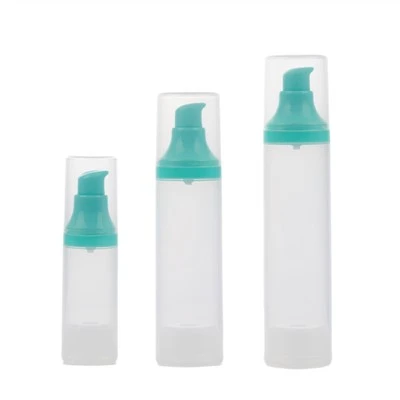
If you’re a brand looking for a packaging partner that understands these challenges and is invested in creating innovative, functional, and sustainable packaging that works for both you and your customers, we’d love to hear from you. Let’s talk through your ideas, work out the kinks, and turn your vision into packaging that not only holds your product, but helps your brand stand out in a crowded market.
Pump Dispenser References:
- Plastic Pollution Coalition. (2023). Compostable Plastics: Current State and Consumer Access. Retrieved from industry sustainability reports on packaging waste management
- U.S. Food and Drug Administration. (2022). Safety of Cosmetic Packaging Materials. Retrieved from FDA cosmetic regulation documentation on packaging compatibility
- European Chemicals Agency. (2021). REACH Regulations for Packaging Materials. Retrieved from ECHA guidance on chemical safety for consumer goods packaging
- Sustainable Packaging Coalition. (2022). The Challenge of Scaling Sustainable Packaging Solutions. Retrieved from annual sustainable packaging industry reports
Jiangsu Welljoin Plastic Co., Ltd.
As one of the most professional cosmetic packaging manufacturers and suppliers in China, our products have good reputation in the market. Please rest assured to wholesale bulk premium cosmetic packaging from our factory. Good service and quality products are available.
Address: No.6 Chuangye Road, Xuanbao Industrial Park, Taixing, Jiangsu, P.R. China
E-mail: paul@welljoin.com.cn
WebSite: https://www.welljoin-pack.com/
