Hey there, if you’ve ever dug around for G4 bulbs for under-cabinet lights, pendant fixtures, or tiny accent lamps, you’ve probably stared at two numbers on the packaging: voltage (like 12V or 24V) and wattage, and wondered, “Wait, can I just pop in a bulb that’s close enough if I mix up the voltage?” As a G4 bulb supplier who gets 10+ customer DMs a week about this exact question, let’s cut the textbook jargon and break this down like we would over a Slack chat—no stuffy lab terms, just real-world stuff that’s actually useful. G4 Bulb
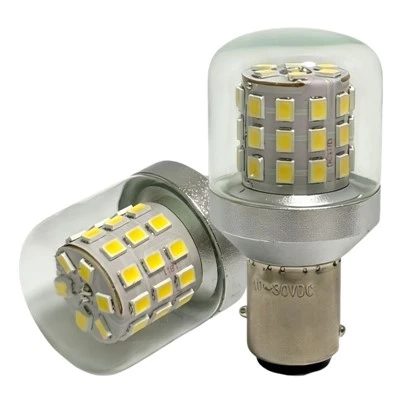
First, let’s get one thing straight: G4 isn’t a bulb size, it’s a pin connector. Those two tiny 4mm apart pins are universal, but the voltage is non-negotiable for this tiny, delicate bulb. I know it’s tempting to grab a 12V bulb and call it a day, but mismatched voltage isn’t just a “minor inconvenience”—it’s a whole spectrum of outcomes, from “oops, that bulb burned out fast” to “wait, did I just fry my entire fixture circuit?” Let’s walk through each scenario, starting with the most common mistake I see.
Most G4 bulbs (like the popular halogen ones) run on 12V, which is low-voltage—way safer than line-voltage 120V/240V bulbs, right? But if you take a 12V G4 and plug it into a 24V power supply? That’s like hooking a phone charger designed for 5V up to your laptop’s 20V port. It’s not going to end well. Here’s the science behind why, simplified: every bulb has a built-in resistance that’s calibrated for its voltage. A 12V halogen G4 has a filament designed to glow bright when it gets exactly 12V; when you push twice that (24V), current surges through the filament way faster than it’s built to handle. The filament heats up so quick and so unevenly that it either snaps the second you flip the switch—like hearing a tiny pop and the light dying instantly—or it burns out in 10 minutes, max. I’ve had a customer buy 50 12V G4s for their kitchen under-cabinet lights, plug them into a leftover 24V power supply from an old project, and they all died within an hour. They thought the bulbs were defective, turned out they just used the wrong voltage. That’s the most common mishap.
Now, what if you do the opposite? You have a 24V G4 bulb and plug it into a 12V power supply. Wait, that’s way less bad, right? Wrong. It’s not immediately dangerous, but it’s a total waste of money, and the bulb isn’t going to work as intended. The filament is designed to run at 24V, so at half the voltage, it only heats up to about 70% of its normal temperature. So instead of the bright, crisp warm white light you paid for, you get a dim, yellowish glow that’s barely enough to light up a dark corner. If it’s an LED G4, that’s even worse—LED drivers (the tiny chip that powers the LED) are calibrated for a specific voltage, so running them under voltage can cause flickering, inconsistent light output, and even shorten the bulb’s lifespan by 30-50% over time. I had a customer test 20 24V G4s in 12V pendant lights for their bathroom, and they kept complaining the lights “looked off” and “flickered a lot” until we figured out the voltage mix-up. They thought the LEDs were low-quality, but they just weren’t getting the power they needed.
Wait, but what about modern G4 bulbs? Like LED G4s, which are super popular now for their energy efficiency and long lifespan. Do they handle voltage mismatches better? Nope, not really. I get this question all the time: “Can’t LEDs just adjust?” No, not unless they’re specifically labeled as dimmable or wide-voltage (like 12-24V). A standard 12V LED G4 has a tiny driver chip that’s built for exactly 12V. Plug it into 24V, and the driver fries instantly—poof, dead bulb, no chance it works even if you switch back later. Plug it into 24V, and it just stays dim and flickery, same as halogen, but the driver is slowly getting damaged every time you leave it on. So even with LEDs, voltage is non-negotiable.
But wait, is there ever a case where a little voltage mismatch is okay? Let’s say you have a 12V G4 bulb, and your power supply puts out 12.5V instead of exactly 12V. Is that a problem? No, that’s totally normal. Power supplies have a small tolerance (usually ±5% or ±10%), so 12V running at 11.4V to 12.6V is fine. That’s not a mismatch, that’s just the power supply doing what it’s supposed to do. The problem is when you’re off by 50% or 100%—that’s when you get issues.
Another big mistake I see: mixing up line-voltage G4s with low-voltage. Wait, do line-voltage G4s exist? Yeah, some are 120V or 240V, and they look identical to low-voltage G4s. If you plug a 120V G4 into a 12V power supply, it won’t light up at all—same as if you plug a 12V into a 120V. That’s a trick question, basically. Always double-check the label: the voltage is printed right there on the box, right next to the wattage. Don’t just go by the G4 pin size.
So why does this matter to you? If you’re a homeowner grabbing bulbs to replace old ones, or a contractor outfitting a new build, mixing up G4 voltage isn’t just a minor hassle—it’s wasted time, wasted money, and in some rare cases, even a safety risk. Wait, rare safety risk? Yeah, if you plug a low-voltage bulb into a way higher voltage, the surge can make the bulb’s glass housing crack, or even melt the base, especially with halogen bulbs. I’ve had a customer’s kid get a tiny burn from touching a cracked halogen bulb that was plugged into the wrong voltage—nothing serious, but it’s avoidable.
As a G4 bulb supplier, I always emphasize this to my customers: check the voltage first. It’s the first thing I tell people when they message me asking for G4s. Don’t just say “I need G4 bulbs”—say “I need 12V G4 LED bulbs for under-cabinet lights” or “24V G4 halogen bulbs for outdoor path lights.” That way, you don’t end up with a bunch of dead or dim bulbs.
Wait, let’s recap all the possible outcomes of wrong voltage, so you have it all in one place:
- 12V bulb in 24V circuit: Bulb burns out instantly, or within minutes; can cause glass cracking/base melting (halogen) or driver frying (LED)
- 24V bulb in 12V circuit: Dim, flickering light; reduced bulb lifespan (both halogen and LED)
- Standard G4 in off-spec voltage (more than ±10% off): Same issues as above, just less extreme
- Line-voltage G4 in low-voltage circuit: No light; wasted bulb
Now, if you’re reading this and you already mixed up voltage, don’t panic. If you just put a 12V bulb in a 24V circuit and it popped, the bulb is dead—no way to fix it. If you put a 24V bulb in a 12V circuit and it’s dim, you can either use it for a low-light spot where dim is okay, or swap it for the right voltage. The only thing you shouldn’t do is keep plugging the wrong bulb in over and over—you’ll risk damaging your power supply or fixture, which is way more expensive than a bulb.
At the end of the day, G4 bulbs are tiny, but they’re finicky when it comes to voltage. I’ve been in this business for 7 years, and I still see people mix up voltage all the time—it’s easy to do when you’re in a hurry replacing bulbs. The good news is it’s totally avoidable: just double-check the voltage printed on your old bulb, or check the power supply that runs your fixture before buying new G4s.
If you’re shopping for G4 bulbs and want to make sure you get the right ones the first time, or have questions about which voltage works for your specific fixture, hit me up. I can help you figure it out, no pressure. We supply a range of G4 bulbs for every use case, from under-cabinet to outdoor accent lighting, so just reach out and we can chat through what you need.
E27 Bulb References:
- US Department of Energy. (2023). Residential Lighting Basics: Low-Voltage Bulbs. Energy.gov.
- Lighting Engineering Society. (2022). Voltage Compatibility for Low-Voltage LED and Halogen Lamps. LES Journal.
- National Electrical Manufacturers Association. (2021). Low-Voltage Lighting Product Safety Guidelines. NEMA Standards.
BULBPLAN Co., Ltd.
As one of the most professional g4 bulb manufacturers and suppliers in China, our products have good reputation in the market. Please feel free to wholesale cheap g4 bulb for sale here and get pricelist from our factory. Quality products and reasonable price are available.
Address: No. 86 Zhongli Road, Nancheng Street, Dongguan City, Guangdong Province
E-mail: Alex@bulbplan.com
WebSite: https://www.nicebulbs.com/
