If you’ve ever driven past a strip mall with that smooth, scratch-resistant metal siding, or grabbed a can of soda from a vending machine with a bright, long-lasting finish, you’ve probably interacted with coil coatings without even realizing it. I’m [Your Coil Coating Supplier Name, leave blank as per instruction], and I get asked this question all the time: “What’s the right curing temperature for coil coatings?” It’s not a one-size-fits-all answer, honestly—skip that, and you’re left with coatings that peel, fade, or scratch way too soon. Let me break this down like I would over a coffee with a new client, no stuffy jargon, no confusing formulas. Coil Coatings
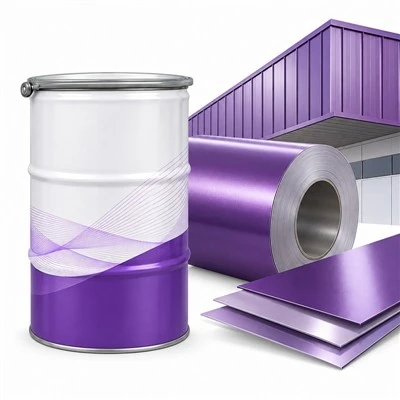
First, let’s set the basics: coil coating isn’t just slapping paint on a metal roll. It’s a continuous process—raw steel or aluminum runs through a line, gets cleaned, pretreated, coated with primer and topcoat, then cured in an oven that’s literally hundreds of feet long. The curing temperature is the sweet spot where the coating’s chemicals link up (that’s cross-linking, if you care, but I’ll keep it simple) so it bonds tight to the metal and turns from a wet, smelly liquid into a hard, durable finish. Mess with the temperature, and you’ve got problems: too cold, and the coating stays soft, rubs off on the roll when it’s folded, or fails adhesion in rain or extreme heat. Too hot, and the paint burns, turns yellow, or cracks—worse, it can make the metal warp, which is a total waste of material and time.
So what’s the actual number? For most standard coil coatings you see every day—like the ones used for residential siding, appliance panels, or vending machines—the cure temp hovers between 400°F and 500°F (that’s 205°C to 260°C, in case you prefer Celsius). But here’s the catch: it’s not just the temp of the oven air. We measure “peak metal temperature” (PMT) — that’s the actual temperature of the metal strip itself when it exits the oven. The air temp can be 450°F, but if the strip moves too fast through the oven, it never actually hits 430°F, so the cure is incomplete. Slow it down too much, and you’ll hit 480°F, which is overkill for most applications.
Now, let’s talk about the different types of coatings, because that’s where the real variation comes in. If you’re using a polyester coating—the workhorse of the industry, cheap and good for 10-15 years of fade resistance—your PMT is usually around 430°F (220°C). That’s the sweet spot for regular outdoor stuff: fences, garage doors, office building trim. Then there’s silicone-modified polyester (SMP) — this is the upgrade for harsher climates, like places with lots of sun or salt air (think coastal areas). SMP cures a bit hotter, around 450°F (232°C), because the silicone molecules need a little more heat to link up right, so they stand up to UV rays way better than regular polyester.
If you’re going for the heavy-duty stuff, like fluoropolymer coatings (Kynar 500 is the big name here), those are for commercial buildings, airports, or coastal projects that need to last 20+ years. Their cure temp is higher, around 475°F (246°C), and they need a longer dwell time in the oven too. Because fluoropolymers are made for extreme conditions, you can’t cut corners here—skimp on temp, and that coating will chalk (turn powdery) after 5 years instead of 20. Then there’s powder coil coatings, which are a bit different than liquid. Powder cures usually sit at 375°F to 400°F (190°C to 205°C) because the dry powder melts and cross-links at lower temps, but you have to make sure the metal stays at that temp for 10-15 minutes, depending on thickness.
Wait, let’s get real about common mistakes. I’ve had clients come to me saying, “We set our oven at 425°F, so we’re good, right?” Nope. Ovens aren’t perfectly even—there are hot spots and cool spots along that long oven line. If you don’t test the actual metal temp with a temp strip (those little stickers that change color when they hit a certain temp), you might have half your coil cured right, and the other half undercured. That leads to callbacks, or worse, your client’s siding peeling 2 years after installation. Another mistake: rushing the line. If the strip moves at 50 feet per minute, you need a longer oven or a higher temp to hit PMT. Slow it to 30 feet per minute, and you’re wasting energy, which raises costs for no reason.
Climate matters too, believe it or not. If you’re coating in a place with super cold warehouse temps, or humid air, the curing time and temp shift a little. Humidity makes the coating’s solvents evaporate slower, so you might need to bump the PMT by 10°F to get the same cure. Cold air in the oven means less heat transfer to the metal, same problem. I always tell new clients: don’t just use the generic temp from the coating can—adjust for your line’s speed, oven consistency, and even the weather in your shop.
Why does all this matter for you? As a supplier, I’m not here to just sell you coil coatings and send you on your way. I remember a few years back, a small metal fabricator reached out to me, saying their previous coating supplier told them to set the oven to 450°F for polyester, but their siding was failing left and right. We tested their line, and their PMT was only 410°F—way too low. We switched them to a primer pair that worked better at lower temps, adjusted their oven speed just a little, and their callback rate dropped by 90%. That’s the kind of thing I care about, not just checking boxes.
Here’s a quick tip if you’re dialing in your line: do a cure test. Run a small strip of metal through your line, pull it out, test its hardness (you can do this with a simple pencil scratch test, or a lab test for cross-link density). If it scratches easily, it’s undercured—crank the PMT by 10°F next run. If it cracks when you bend it, you’re overcured—slow the line, or drop the temp a bit. It’s trial and error, but once you get it right, it saves you so much headache.
A lot of people ask about newer coatings, like water-based coil coatings, which are more eco-friendly than traditional solvent-based ones. Their cure temps are almost the same as solvent-based, but the dwell time is a little longer because water takes a bit more time to evaporate. No need to get a whole new oven—just adjust your line speed, which is a win for anyone trying to make their operation greener.
Now, let’s wrap this up without the boring stuff. The short answer: standard coil coatings (polyester) cure at ~430°F PMT, SMP at ~450°F, fluoropolymers at ~475°F, powder coils at ~375-400°F. But the real answer is: it depends on your coating type, your line, your oven, and even your location. I don’t do generic numbers because I’ve seen what happens when you use one-size-fits-all.
If you’re working on a project, troubleshooting a bad cure, or just want to make sure you’re using the right temp for your coil, hit me up. I don’t do sales pitches that feel like scripts—we can talk through your line, your coating, and figure out what works for you. No hidden fees, no jargon, just straight answers about coil coatings.
Coil Coatings References
- Coil Coating Association. (2022). Coil Coating Process Guidelines.
- American Society for Testing and Materials (ASTM). (2021). Standard Test Methods for Curing of Organic Coatings on Metal.
- Dupont. (2020). Kynar 500 Fluoropolymer Coating Application Manual.
Ping Yuan Wen Te Industry Co., Ltd.
As one of the most professional coil coatings manufacturers and suppliers in China, we also support customized service. Please feel free to wholesale high quality coil coatings in stock here from our factory. Welcome to contact us for quotation.
Address: Longmen Economic Development Zone, Pingyuan County, Dezhou City, Shandong Province
E-mail: pywente@outlook.com
WebSite: https://www.wenteglobal.com/
