Alright, let’s cut to the chase—if you’ve ever worked with Squid Tubes, you know how game-changing they are for marine research, aquaculture, and even some cool commercial stuff. But over time, parts wear out, right? Maybe your mounting bracket cracks, or the sensor housing gets scratched, or the pump clogs enough that performance takes a nosedive. The big question I get every week from clients is: “Can I replace parts of a Squid Tube instead of tossing the whole thing?” Spoiler alert: yes—if you do it right, it’s not only possible, it’s way cheaper and more sustainable than buying a new unit. As someone who’s been supplying Squid Tubes for 8 years, I’ve seen my fair share of DIY fails and wins, so let’s break this down like we’re chatting over a coffee (minus the actual coffee stain on your data sheet). Squid Tube
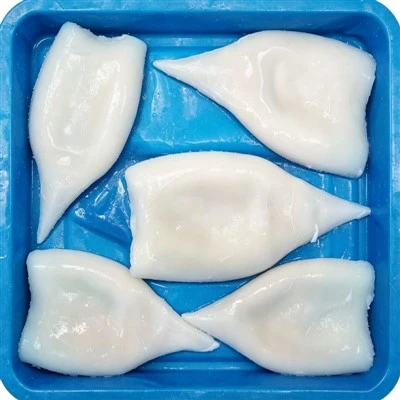
First, let’s get clear on what a Squid Tube actually is, because not everyone who reaches out knows the nitty-gritty. It’s a compact, submersible device used mostly to measure water parameters: dissolved oxygen, pH, temperature, salinity—you name it. Think of it as a rugged, waterproof data logger that can sit at depth for months (or even years) at a time. The main unit has a few key replaceable parts, and then some that you shouldn’t mess with unless you know what you’re doing. Let’s start with the parts that are totally user-serviceable—no special tools, no PhD required.
The first big one: the sensor caps. These are the little plastic (or sometimes titanium) covers that protect the internal sensors from getting banged up by debris, or coated in gunk that messes with readings. Over time, algae grows on ’em, or they crack if you drag the Squid Tube across a dock or step on it (don’t ask how I know that). Replacing these is as easy as twisting the old cap off and clicking a new one on—seriously, no tools needed. The only catch here is that you have to get the right sensor cap for your Squid Tube model. For example, our Model 3 Squid Tube uses a cap with a 20mm threaded base, while our Mini Squid Tube uses a smaller 15mm snap-on cap. If you mix those up, it won’t seal right, and you’ll get water leaks. I’ve had a few clients order the wrong cap on Amazon (side note: skip random third-party parts—they’re cheap but never fit right) and come back swearing their Squid Tube broke, when really it was just a mismatched cap. Trust me, stick to parts from the original supplier, or someone who’s tested for compatibility.
Next up: the pump filter. If your Squid Tube has a flow-through pump (most models do for continuous DO readings), there’s a small mesh filter that keeps barnacles, plankton, and sediment from clogging the pump. This is a weekly maintenance part, honestly—if you don’t swap it out when it’s dirty, the flow drops, and your DO readings start to fluctuate like a bad stock graph. Replacing this is super simple: you pop open the pump compartment (it has a small O-ring seal, so make sure you don’t lose that), pull out the old filter, and push a new one in. Again, model-specific—our filters are color-coded by size, so the black filter is for regular Squid Tubes, gray for the Mini, and gold for the deep-water model that handles high pressure. We send a pack of 5 filters with every new unit, and I tell all clients to keep a spare on hand because a clogged filter mid-field campaign is a nightmare. I once had a researcher in the Gulf of Mexico call me at 2 a.m. panicking because her filter got clogged with red tide algae, and we overnighted a pack—saved her a $2,000 data set, no cap.
Then there’s the mounting bracket. These are the arms that attach your Squid Tube to a dock, a buoy, or a research vessel. Most brackets are made of marine-grade aluminum or plastic, and if they bend or break, replacing them is a cinch. You just loosen two Allen bolts, swap the old bracket for a new one, and tighten ’em back up. The only thing to watch here is the mounting pitch—some Squid Tubes need to be mounted at a 15-degree angle for accurate surface water readings, so if you’re swapping brackets, double-check the spec sheet. I’ve had a client who mounted his Squid Tube flat and got wonky temperature data—turned out his old bracket broke, and he replaced it with a generic one that didn’t have the angle notch. Oops.
Now, the parts that are replaceable but need a little more care—these aren’t “do it on the boat in 2 minutes” parts, but still totally doable if you’re handy with a screwdriver and follow instructions. The battery pack, for example. A lot of Squid Tube models use a rechargeable lithium-ion battery that lasts 6-12 months, depending on usage. When the battery dies, you don’t have to send the whole unit back to us (unless you want to), you can swap it out yourself. But here’s the thing: the battery compartment is pressure-sealed, so you have to use the supplied O-ring lubricant (we send that with every replacement battery) to make sure it doesn’t leak. No using Vaseline—oil-based stuff eats away at the rubber O-ring and causes leaks, which kills the electronics. I once had a customer use hand lotion instead, and his Squid Tube died at 50 feet. He sent it back, we fixed it, and now he buys our OEM batteries every time. Small mistake, big headache.
The last user-serviceable part here is the data port cover. That rubber or plastic cap that covers the USB port for downloading data—if it tears or gets lost, you can replace it. It’s a simple snap-on part, but again, don’t use a random replacement. The port is waterproof, so a cheap generic cover won’t seal right, and you’ll get moisture in the port, which corrupts data. We sell these for like $3, so it’s not worth cutting corners here.
Now, let’s talk about the parts you should NOT replace on your own. The main circuit board, the pressure housing, and the internal sensors (like the DO probe or pH electrode). These are precision parts, and if you mess with them, you’ll end up with a Squid Tube that doesn’t work at all. I’ve had a few clients try to swap their own DO probe because they thought it was “just a sensor,” but they calibrated it wrong, and their readings were off by 2 ppm. That’s a huge difference in marine research—2 ppm DO means the water is either healthy or dead, depending on the context. If you need to replace the main circuit board or a core sensor, send it back to us. We have a team of techs that can do it in 24 hours, and we even have a free calibration service for core parts. It’s way cheaper than buying a new unit, and you don’t risk messing up your data.
Wait, let’s also touch on sustainability, because that’s a big one lately. A lot of clients come to us worried about e-waste—they don’t want to toss a perfectly good Squid Tube just because one part broke. Replacing parts is way better for the planet, and it saves them money too. For example, if your Squid Tube’s bracket breaks, a new bracket is $25, vs. a new Squid Tube is $1,800. That’s a no-brainer. We actually have a part replacement program where you can send in your old broken parts (like cracked caps or old filters) and we recycle them, so nothing goes to landfill. I’m big on that—my company’s goal is to reduce e-waste by 30% this year, and part replacements are a huge part of that.
Now, let’s get real about the DIY fails I’ve seen. Last year, a commercial aquaculture client tried to replace his Squid Tube’s pump on a weekend because he didn’t want to wait for a spare. He used a drill to take apart the pump housing, and nicked a tiny wire inside. By Monday, his Squid Tube was dead, and he lost a week of water quality data for his tilapia farm—cost him like $10,000 in lost stock because he couldn’t track oxygen levels. That’s why I always say: if it’s a core part (pump, circuit board, main sensor), don’t DIY. If it’s a cap, filter, bracket—go for it, just stick to OEM parts.
So, to wrap this up: yes, you can replace parts of a Squid Tube. The trick is knowing which parts you can swap on your own, which ones need a little help, and which ones you should leave to the pros. If you’re not sure if a part is replaceable, just shoot us an email or give us a call—we’re here to help, no sales pitch, just honest advice. At the end of the day, we’re not just selling Squid Tubes, we’re supporting marine researchers, aquaculture farmers, and environmental groups. We want your gear to last as long as possible, and that means making parts easy to replace, not making you buy new every time something breaks.

If you’ve got a Squid Tube that’s got a worn part, or you need to stock up on replacement parts for your next field season, hit us up to chat through your needs. We can tell you exactly which parts you need, send them out fast, and even walk you through the replacement process over the phone if you get stuck. No hoops, no fine print—just straight talk and parts that work.
Crab Claw References:
- U.S. Environmental Protection Agency. (2022). E-Waste Reduction Strategies for Marine Monitoring Equipment.
- National Oceanic and Atmospheric Administration. (2021). Best Practices for Sustained Water Quality Monitoring with Submersible Sensors.
- International Organization for Standardization. (2020). ISO 18402: Marine Environment Protection – Guidelines for Water Quality Sensor Maintenance and Repair.
Yantai East Food Storage Co., Ltd.
We’re well-known as one of the most experienced squid tube manufacturers in China. With a professional production team, we offer a wide range of frozen seafood with superior quality. Please feel free to wholesale bulk premium squid tube at low price from our factory.
Address: Room 1317, Huaxin International Business Building, No.28 Changjiang Road, Yantai Area, China (Shandong) Pilot Free Trade Zone
E-mail: sales@eastfoodcn.com
WebSite: https://www.yantaieastfood.com/
