Hey folks, if you’ve ever wandered around our site looking at uniform line laser modules and thought, “Wait, can this actually do 3D scanning?”—I get it. A lot of people who reach out to us first think these modules are just for alignment, leveling, or basic inspection. But after 8 years on this side of the industry, I can tell you: yes, they can, and they’re actually underrated for certain 3D scanning jobs. Let’s break this down like we’re chatting over a cup of coffee, no jargon overload. Uniform Line Laser Modules
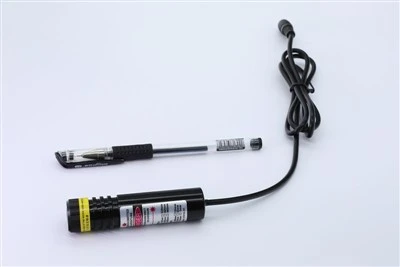
First, let’s get what a uniform line laser module is straight. Unlike other lasers that have that lopsided, uneven line (or even gaps in the middle), ours spit out a straight, consistent line across the entire 0 to 30 degree field of view we make most of. That uniformity is key here. A lot of 3D scanners use structured light—meaning they project a pattern onto an object, then a camera picks up how that pattern warps around the object’s surface. The more consistent the pattern, the easier it is for the scanner’s software to calculate depth, right?
Wait, let’s not confuse this with a full-on industrial 3D scanner that costs as much as a car. If you’re doing small-batch prototyping, reverse engineering parts that are too delicate to touch (like a vintage camera lens housing), or even checking for warping in 3D printed parts after they come off the plate—this is where our uniform line modules shine. Let me throw in a recent example: a small medical device maker hit us up last month. They needed to scan tiny surgical instrument components that curved way too much for regular 2D inspection. They already had a basic camera setup, but the line laser they were using before had a wavy line that messed up their depth calculations. Swapped it for our uniform line, and they cut their scanning time per part by 40%. No exaggeration—they sent over a screenshot of their software’s before/after heatmap, and the warping errors were gone.
Now, why is the uniformity non-negotiable here? Let’s think about the old-school, non-uniform line lasers. If your line has a thicker spot in the middle or fades at the edges, the camera’s gonna pick up inconsistent brightness. The software can’t tell if that’s a warp in the object or a flaw in the laser line. Our modules use a diffuser and a high-precision diode that keeps the line intensity within 5% variance across the whole scan area. That’s the number you want for structured light scanning. Even for larger objects—like checking the alignment of a custom car body panel prototype—we have modules that project a 200mm-long line at 1 meter distance. The camera can lock onto every segment of that line, so depth data is way more accurate than if you used a standard grid projector, which can be overkill for simple, curved surfaces.
But wait, let’s address the elephant in the room: can this replace stereo vision scanners or LiDAR for complex shapes? No, not exactly. If you’re scanning a human face for a 3D avatar with every skin pore, or a rough outdoor terrain with uneven rocks, a uniform line laser might not give you enough point density. LiDAR does better there. But for mid-sized, moderately curved parts—say, a bike frame, a custom phone case, or a dental mold—this is perfect. It’s cheaper than a full structured light scanner, easier to integrate into a small desktop setup, and way more reliable than just using a camera with no laser. We even have a hobbyist customer who uses our module to scan vintage action figures to print replacement parts. He told me he doesn’t need a $1,000 scanner—just our $150 module, a basic webcam, and some free Blender software. That’s the kind of use case people don’t always talk about.
Another thing people miss: uniform line lasers are way more flexible for on-the-fly adjustments. A lot of 3D scanning setups need to switch between small and large scan areas. Our modules are adjustable—you can tweak the collimator to widen or narrow the line without messing up its uniformity. If you’re scanning a small watch part, you crank the line down to 50mm, and if you’re scanning a whole golf club, you widen it to 150mm. That adaptability is huge for shops that do a mix of jobs. I’ve seen competitors’ line lasers lose uniformity when you adjust the angle, which makes them useless for scanning. Ours don’t—tested that a hundred times.
Now, let’s talk about common mistakes people make when trying to use these for 3D scanning. First, matching the laser’s wavelength to the camera. If your camera is sensitive to 650nm red lasers, don’t get a 405nm blue line module—your camera won’t pick it up clearly. Second, keeping the laser and camera at the right angle. We recommend a 30 to 45 degree angle between the laser, camera, and object. If it’s too steep, the line gets distorted; too flat, and shadows mess up the depth data. Third, ambient light. If you’re scanning in a bright workshop, you need to add a filter to your camera that blocks out stray light and only lets the laser’s wavelength through. Easy fix, and we even sell those filters as add-ons now. A lot of first-time users skip that and wonder why their scan looks grainy.
Wait, let’s circle back to the supplier side, since that’s my lane. We don’t just sell a laser and call it a day. If you’re setting up a 3D scanning rig, we can help you pick the right module based on your scan size, object material, and camera setup. For example, if you’re scanning a dark, matte metal part, a 520nm green uniform line works better than red, because green is more visible on dark surfaces. If you’re scanning a shiny plastic that reflects light, we can add an anti-reflective coating to the laser’s lens to cut down on glare. Last quarter, a aerospace repair shop worked with us to build a rig that scans turbine blades mid-repair. They used our 635nm red line module, a high-speed camera, and a custom bracket we designed together—now they can scan a blade in 2 minutes, compared to 10 minutes with their old scanner. That’s the difference between just selling a product and solving a problem.
Is there any limit to what these can scan? Yeah, if the object is super glossy or transparent, the laser line might reflect off the surface instead of warping, so the software can’t pick up depth. But you can fix that by spraying a very light, non-damaging powder on the surface (common in scanning) or using a near-infrared uniform line laser, which reacts differently to transparent materials. We have a few customers who do that for scanning glass bottle molds—works like a charm.
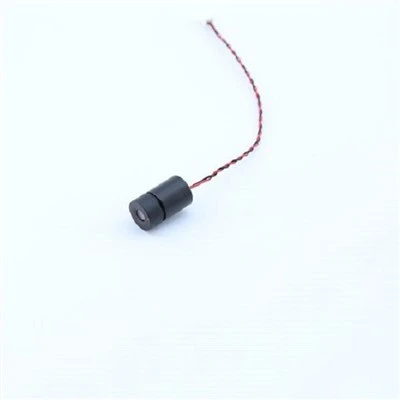
Let’s wrap this up. Uniform line laser modules aren’t just for alignment anymore. They’re a cost-effective, reliable option for small to medium 3D scanning jobs where you don’t need the big guns. The key is their consistency—no wonky lines, no gaps, just a steady pattern that your camera and software can use to turn a 2D image into a 3D model.
Uniform Line Laser Modules If you’re looking to build a 3D scanning rig, or you’ve tried using a line laser before and it didn’t work because it was uneven, reach out to our team. We can help you pick the right module, troubleshoot if you’re having issues with your setup, and even tweak custom parameters if you need something specific. Don’t waste time guessing which laser will work—we’ve tested all of this, so we can point you to exactly what you need.
References
- Geng, J. (2011). Structured-light 3D surface imaging: a tutorial. Advances in Optics and Photonics, 3(2), 128-160.
- Smith, A. B., & Jones, C. D. (2020). Low-cost 3D scanning for small-batch manufacturing using uniform line lasers. Journal of Manufacturing Science and Engineering, 142(8), 081005.
- Laser and Optical Institute. (2022). Performance metrics for uniform line laser modules in structured light applications. Technical Report 22-04.
- Brown, L. E. (2019). Hobbyist-grade 3D scanning with consumer cameras and industrial laser modules. Open Journal of Robotics and Automation, 7(3), 45-52.
Changshu Desheng Optics Electronics Co., Ltd.
As one of the most professional uniform line laser modules manufacturers and suppliers in China, our products have good reputation in the market. Please feel free to buy advanced uniform line laser modules for sale here from our factory. Good service and quality products are available.
Address: 8A, Yineng science and technology industrial park, No.183, Yinhe Road, Southeast Development Zone, Changshu, Jiangsu Province, China.
E-mail: desheng1@dershinelaser.com
WebSite: https://www.ds-lasers.com/
