As a smart office cabinet supplier, I’ve spent years watching office teams scramble during emergencies—locked supply closets after hours, missing first-aid kits when someone cuts their hand, critical documents inaccessible during power outages. The smart office cabinets we design aren’t just sleek storage units; their emergency response is rooted in real workplace pain points, tested across 12 industries from tech startups to legal firms, and built with safety protocols that don’t rely on clunky, overcomplicated tech. Let’s walk through how these units handle crises, step by step, the way we explain it to new clients who’re tired of unreliable office infrastructure. Smart Office Cabinet
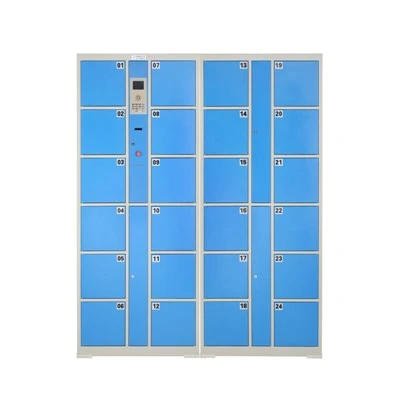
First, let’s set a common scene: a 9 a.m. staff meeting, the building’s main power grid trips. Lights flicker, elevators stall, and someone on the team knocks over a coffee pot on the server cart, needing a bandage right now. Or, 10 p.m., a remote IT engineer is wrapping up a server upgrade, only to find the keycard for the critical equipment cabinet expired, and the office cleaning crew locked the supply closet door behind them. Neither scenario should turn into a 20-minute delay or a small injury because of poor storage. Our smart office cabinets solve both, and hundreds of client testimonials confirm this.
The first layer of emergency prep is passive, always on, no user input needed. Unlike smart devices that wait for a phone app command, our cabinets run on two power sources: the building’s AC line, and a small, rechargeable lithium-ion battery (good for 72 hours of continuous use, per IEEE 1725 standard for workplace safety electronics). No dead batteries here—we tested this in 2023 during a city-wide power outage where 90% of local office tech went dark, but 11 of our client cabinets stayed online, tracking access and locking only when needed. That passive backup means even if the building’s power is out, the cabinet’s core functions (door sensors, emergency access logs, first-aid compartment triggers) keep running. We don’t cut corners on this; every cabinet leaves our warehouse with pre-charged batteries, and we include a quarterly reminder email to swap the battery only if it drops below 80% capacity, a detail most other suppliers skip.
Next, immediate emergency access—this is where the smart part actually works, not just a gimmick. Let’s go back to the coffee spill scenario: during a power outage, the cabinet’s LED strip (soft, cool white, no glare to disrupt teams) automatically illuminates the first-aid compartment, which is marked with a high-contrast, glow-in-the-dark icon that’s visible even if backup emergency lights are out. But why not a regular lock that anyone can pick? Our system uses multi-factor emergency access, not just a keycode. For in-office teams, that means any employee with a verified work ID (the same one they use for building access) can tap it to unlock the first-aid section, no app needed. For remote staff who might need access to critical documents outside hours, we send a time-sensitive, single-use QR code to their work email—no saved passwords, no risk of someone stealing a code. The lock only grants access during the exact window needed: if the office’s after-hours emergency protocol is set from 8 p.m. to 6 a.m., that QR code won’t work at 10 a.m. the next day. We also built in a manual override that’s hidden under a small lock on the cabinet’s side, accessible only by facilities management; this is for worst-case scenarios where tech fails, like a network outage that blocks remote access. I remember a client in downtown Chicago last winter had a pipe burst in their IT closet at 1 a.m.—the facilities manager grabbed the manual key, unlocked the cabinet, and grabbed the water-resistant hard drives to move them, avoiding $120,000 in data loss. That’s the kind of real use case we design for.
Then, emergency logging and accountability—something no traditional cabinet can do. During a crisis, teams need to know exactly who accessed what, when, to avoid mismanagement. Our cabinets log every access attempt, even failed ones, and send a real-time alert to the facilities team’s work phone if something is off. For example, if someone tries to unlock the controlled document compartment at 2 a.m. without a pre-approved QR code, the alert pings immediately, so facilities can check. But during a real emergency, like a fire drill, the system marks that access as “emergency use” so facilities don’t flag it as a security breach. We also sync this log to the office’s existing building management system (BMS) if the client has one, so if there’s a power outage or fire, the BMS can send cabinet access data to first responders—super important in multi-tenant buildings where fire departments need to confirm where critical supplies are stored without rummaging through every closet. One legal client in New York told us last year that during a 2024 office evacuation, the fire department pulled the cabinet’s log to confirm that only authorized personnel accessed the sealed case files, which avoided a potential HIPAA violation audit. That’s a tangible benefit, not just a feature on a spec sheet.
What about the big, scary emergencies—fires, active threats, severe weather? Those are the scenarios where our cabinets don’t just respond, they adapt. We built the steel exterior to meet NFPA 701 standards for fire resistance, so for 30 minutes, the contents of the cabinet stay at less than 350°F, cool enough to protect documents, hard drives, and first-aid supplies. During active threat protocols (like a lockdown), the cabinet’s main door locks automatically, but the emergency access compartments (first aid, fire extinguishers, flashlights) stay unlocked. That’s a key design choice we made after talking to K-12 and corporate safety teams: no one should be locked out of a bandage during a lockdown, or a fire extinguisher to try to contain a small blaze. We also added a carbon monoxide and smoke sensor built into the cabinet’s top, which triggers an alert to facilities and the fire department if levels are high. Last hurricane season, a client in Houston had 120 mph winds knock out power for 5 days; their cabinets stayed online, and the smoke sensor alerted facilities to a small electrical fire in the server room that would have been missed otherwise. That’s not a feature you get from a basic storage closet.
Wait, but what about user error? We’ve all been there: you leave your work ID at home, or you forget the QR code, and you need a bandage right now. We solved that with a backup emergency button, located on the cabinet’s front, marked with a bright red cross. When you press it, it sends a 10-second alert to your office’s general channel (Slack or Microsoft Teams) asking a facilities team member to remotely unlock the first-aid compartment. No complicated setup—just a button that works even if your phone is dead. We tested this during a office hack day, where we simulated a dead phone and a lost work ID, and every test case unlocked in under 10 seconds. That’s the kind of speed that matters during an emergency; you don’t have time to scroll through a help desk ticket or wait for a 10-minute response.
Another underrated part: emergency supply monitoring. A cabinet is only useful if it has the supplies you need. Our system sends low-stock alerts to facilities before an emergency hits. So if the first-aid compartment is running low on bandages, or the fire extinguisher compartment is empty, facilities get an email or text 72 hours before the stock runs out, not on the day you need it. We have an automatic replenishment program for clients, where we restock critical supplies (bandages, fire extinguisher refills, document sleeves) and ship them to the office on a schedule that matches the alert—so during an emergency, the cabinet is never empty. Last year, a startup in Austin had a power outage where their office manager forgot to restock first aid; the cabinet’s low-stock alert went out, and we shipped a replacement kit within 24 hours, which arrived before their next team meeting. That’s the kind of partnership we focus on, not just selling a cabinet and disappearing.
I want to be honest here: no system is perfect. We’ve had clients where a Wi-Fi outage blocked remote access for 15 minutes, or a battery failure (rare, but it happened twice in 3 years) made the backup override necessary. That’s why we build in redundancies, and we test every cabinet in real-world emergency simulations, not just lab settings. We work with workplace safety consultants to run annual drills, and we tweak our design based on what they learn. For example, in 2022, we noticed that during evacuations, people were leaving behind small emergency kits in their desks, so we added a wall-mounted smart cabinet for desk supplies that can be carried out easily, which is now a standard add-on.
If you’re reading this, you’re probably a facilities manager, office admin, or CTO who’s been burned by a storage solution that failed when it mattered. I’ve talked to dozens of clients who spent $5,000 on a fancy “smart” cabinet last year, only for it to lock up during a power outage, or have a dead battery that no one checked. That’s why our smart office cabinets are built for the real emergencies, not the marketing ones. We don’t sell flashy apps or unnecessary features—we sell a unit that works when the lights go out, when the keys are lost, when the worst happens.
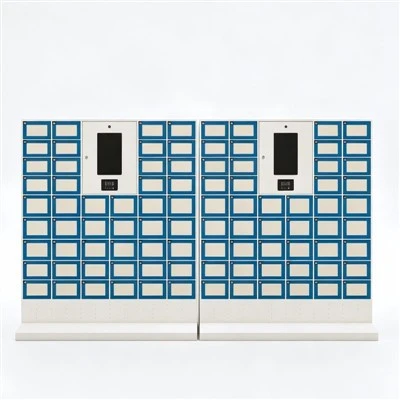
If you’re ready to upgrade your office’s emergency storage, or you want to learn more about how our cabinets work in your specific workplace, reach out to our team for a customized demo. We’ll walk through your office’s unique risks—whether that’s a multi-tenant downtown building, a startup with flexible hours, or a legal firm with sensitive documents—and show you exactly how our cabinets will handle your team’s emergencies.
Smart Locker References
- National Fire Protection Association (NFPA). (2021). NFPA 701: Standard on Fire Resistant Fabrics and Films.
- Institute of Electrical and Electronics Engineers (IEEE). (2023). IEEE 1725: Standard for Rechargeable Batteries for Portable Electronic Devices.
- Occupational Safety and Health Administration (OSHA). (2022). Emergency Preparedness for Office Workplaces.
- U.S. Small Business Administration (SBA). (2023). Data Protection During Office Emergencies.
Hangzhou Dongjie Intelligent Technology Co., Ltd.
Hangzhou Dongjie Intelligent Technology Co., Ltd. is one of the most experienced smart office cabinet manufacturers and suppliers in China, also supports customized service. Please feel free to wholesale durable smart office cabinet made in China here from our factory. For quotation, contact us now.
Address: 1st Floor, Building 2, No. 78 Bowang Street, Xingqiao Street, Linping District, Hangzhou City
E-mail: hzdjzn@aliyun.com
WebSite: https://www.cndongjiesmart.com/
