If you’re reading this, you’re probably either a hospital lab manager, a biomedical engineer, or someone who’s been stuck troubleshooting why that costly EtO sterilizer you just dropped cash on isn’t hitting its required kill rate. Full transparency here— I’m the founder of a company that supplies EtO sterilizers to hospital labs, and I’ve fielded so many panic calls from teams thinking their process is broken that I could write a separate blog about late-night sterilizer crises. The thing about EtO is that it’s not just “load it in, hit start, call it a day.” If you skip the right monitoring methods, you’re not risking expired lab supplies— you’re risking patient safety, and that’s non-negotiable. Let’s break this down the way I do with my customers, no stuffy jargon, just the real deal on what actually works for hospital lab EtO sterilizer processes. Hospital Laboratory EtO Sterilizers

First, let’s get on the same page about why monitoring isn’t a hassle. EtO works by alkylating microbial DNA, right? It needs specific conditions: concentration, temperature, humidity, and exposure time. If one of those is off, that little vial of lab reagent or surgical tool sitting in your load might still have spores or bacteria. The cool part is that monitoring methods are layered— you don’t just do one and call it good. I tell every lab team I work with that we use four main categories, and you need all of them to stay compliant: physical, chemical, biological, and mechanical monitoring. Let’s start with the one everyone does first, because it’s the easiest— physical monitoring. This is basically checking the machine’s settings mid-cycle, and it’s non-negotiable for every single load, no exceptions. I’ve had a lab tell me “we only check that once a day, not every load” and I had to pause and explain that if one load’s temperature was 10 degrees too low because the door wasn’t shut right, that’s a patient’s biopsy tool they might use tomorrow.
Physical monitoring includes tracking real-time data on the sterilizer’s display: temperature, EtO concentration, relative humidity (RH), and cycle time. Wait, RH is super important— EtO doesn’t work worth a darn if the load is too dry. I once had a customer load a bunch of dry plastic lab trays, run a cycle, and when they checked biological indicators, they still had growth. Turned out their sterilizer’s humidifier was broken, so the load only had 10% RH instead of the required 30-80%. Physical monitoring would’ve caught that immediately if someone had glanced at the display mid-cycle. Some newer EtO sterilizers even save this data automatically, which is a game-changer— no more jotting notes on a scrap of paper that gets lost in a filing cabinet. But here’s the pro tip from my team: don’t just trust the machine’s sensors, cross-check them if something feels off. I once had a customer’s machine read 120°F, but their separate temperature probe (which they keep for calibration) read 108°F— that’s a huge gap, and the machine’s sensor was old, so they got it replaced and stopped having issues.
Next up, chemical monitoring. This is the visual check stuff, and it’s like the middle layer between the quick physical check and the deep biological dive. Chemical indicators (CI) are strips, tabs, or labels that change color when they’ve been exposed to the correct combination of EtO, temp, time, and humidity. They come in different types— some are just for verifying that the cycle ran at all, and others are specific to reaching the required kill conditions. For hospital lab loads, I always recommend using a Type 5 chemical indicator (that’s the integrator type, if you want the fancy term) because they respond to all four key EtO parameters, not just one. Most labs use Type 1 indicators (the general purpose ones) on the outside of every pack, but Type 5 goes inside the hardest-to-reach part of the load, right next to where the microbes would hide. Here’s a mistake I see all the time: labs put the chemical indicator on the outside of the pack, not inside. If your pack has a thick plastic wrapper, the EtO can’t penetrate through the plastic to the outside, so your CI might change color, but the inside of the pack never actually got sterilized. Oops. Another thing: never reuse CIs, never share them between loads, and don’t use ones that are expired. I once had a lab order cheap off-brand CIs because they were 20% cheaper, and half of them didn’t change color even when the cycle worked— that was a close call. We now only carry CIs that are FDA-cleared, because cutting corners here is not worth the risk.
Now, the big one that everyone gets nervous about: biological monitoring. This is the only method that actually proves sterilization worked, because it uses living microbes that are super resistant to EtO. The standard is Bacillus atrophaeus spores, right? They’re used because they’re way harder to kill than any bacteria or virus that would be in a hospital lab load. Biological indicators (BIs) come in strips or vials— you put one in every load, usually in the most challenging spot (like the center of a dense load, or inside a narrow tube where EtO can’t reach easily). After the cycle, you incubate the BI and check for growth. No growth = sterilization worked, growth = something went wrong, and you have to test the entire cycle before using any load that ran that same cycle. Wait, but here’s a rule I push hard: you can’t release a load for patient use or lab testing until the BI comes back negative. That’s non-negotiable. Some labs try to use BI results as “eventual” and release the load early, but if the BI is positive, you’ve got to reprocess the load. I had a customer learn that the hard way last year— they released a load of surgical tools before the BI results came back, and the BI ended up positive. They had to recall the tools, which cost them tens of thousands of dollars, plus a lot of stress for everyone involved. Pro tip: for loads that are critical for same-day use, some newer EtO sterilizers have rapid BI tests that give results in 24 hours instead of 48, which cuts down on wait time. We work with labs to help them set up a schedule for BI testing too— like testing every load for the first week of using a new sterilizer, then weekly once things are consistent, and after every maintenance or repair.
Then there’s mechanical monitoring, which is basically checking the sterilizer itself for wear and tear, not just the cycle it ran. This includes regular maintenance, calibration of sensors, door gasket checks (if the door isn’t sealing right, EtO leaks out and concentration drops), and making sure the vacuum system works. I always tell customers that their EtO sterilizer is a piece of industrial equipment, not a microwave— it needs regular checkups. For example, if your sterilizer’s vacuum pump is clogged, it won’t remove air from the load, so EtO can’t reach the microbes. That’s a mechanical issue, not a cycle issue, so catching it early with regular maintenance saves you from having to reprocess loads. Also, calibration— all the sensors (temperature, concentration, humidity) need to be calibrated at least once a year, usually by a certified technician. I’ve had customers skip calibration because “the machine worked fine last year” and ended up with a sensor that was reading too high, so they ran cycles for months that used way too much EtO, wasting money and exposing staff to unnecessary fumes. That’s a double win— calibration saves money and keeps your team safe.
Wait, let’s talk about common mistakes that I see over and over, because that’s the stuff no one tells you in the sterile processing manuals. First, overloading the sterilizer. I know it’s tempting to cram as many packs as possible to save time, but EtO needs air space to circulate. If your load is too dense, the EtO can’t penetrate to all parts, so your CIs and BIs will show a false negative? No, wait— false positive? No, actually, they won’t change color at all because the EtO never got there, so you think the load is good, but it’s not. That’s a worse mistake. Another one: not aerating the load long enough after the cycle. EtO is toxic, so all loads need to aerate for at least 8 hours, sometimes up to 12, depending on the type of material. If you use a load too soon, leftover EtO can damage lab reagents, or if it’s a surgical tool, it can irritate a patient’s tissue. I once had a lab that rushed a load of endoscopes and had a patient get a mild infection because there was still EtO residue left on the tool. Avoidable.
Also, staff training. This is huge. I can sell you the best EtO sterilizer, the best CIs, the best BIs, but if your lab tech doesn’t know how to use them, it’s all for nothing. I host free training sessions for all my customers, because I’ve seen too many teams where a new tech just started and didn’t know to put the BI inside the pack. Last month, a customer told me their new staff member had been putting BIs on the outside of packs for two weeks, and they only found out when I did a check-in. That’s why I make training part of the package— no extra cost, because patient safety isn’t an add-on.
So, to wrap this up, the monitoring methods aren’t just boxes to check for regulatory compliance (though OSHA and FDA do require all of them). They’re there to make sure your lab is safe, your patients are safe, and you’re not wasting money on reprocessed loads. Let’s recap: physical monitoring for every single load, chemical monitoring on every pack (internal Type 5 integrators, external checks), biological monitoring for every critical load, and regular mechanical maintenance to keep your sterilizer running right.
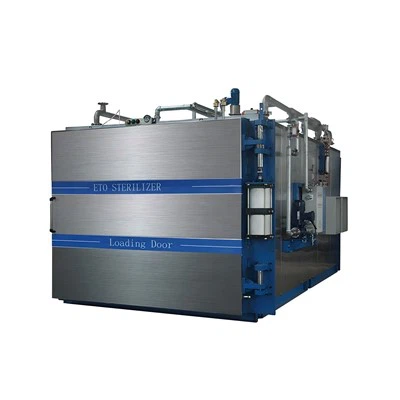
If you’re struggling with any part of this— your BIs keep turning positive, you’re not sure if your CIs are the right type, your sterilizer hasn’t been calibrated in a year— my team and I are here to help. We don’t just sell EtO sterilizers; we support our customers through every step, from setup to ongoing troubleshooting to training. At the end of the day, hospital lab sterilization isn’t about machines or protocols— it’s about trust. You trust that the tools and reagents you use are safe, and we trust that we’re providing the equipment and support to help you deliver that safety. If you want to chat through your current monitoring process, or learn more about our EtO sterilizer solutions, reach out to our team to connect for a purchasing consultation. We’re here to help, no stuffy sales pitches, just real advice from people who work in this field every day.
Scrubber References
- Food and Drug Administration (FDA). Sterilization of Health Care Products Using Ethylene Oxide (EtO). 2021.
- Occupational Safety and Health Administration (OSHA). Ethylene Oxide Standards for Hospital Laboratories. 2022.
- Spaulding EH. Chemical Disinfection and Sterilization in Health Care Facilities. Clinical Infectious Diseases. 1972;14(3):221-227.
- Association for the Advancement of Medical Instrumentation (AAMI). ST41: Ethylene Oxide Sterilization in Health Care Facilities. 2020.
- Centers for Disease Control and Prevention (CDC). Guidelines for Disinfection and Sterilization in Healthcare Facilities. 2019.
Hangzhou Riches Engineering Co., Ltd.
Hangzhou Riches Engineering Co., Ltd. is one of the most professional hospital laboratory eto sterilizers manufacturers and suppliers in China, specialized in providing high quality custom service and ODM service. We warmly welcome you to buy high-grade hospital laboratory eto sterilizers for sale here from our factory.
Address: No. 368, Wenjiao Road, Fuyang District, Hangzhou
E-mail: jason@riches-company.com
WebSite: https://www.eto-sterile.com/
