If you’ve ever stood on a factory floor where stamped welded auto components are being assembled, you know the difference between materials isn’t just a technical detail—it’s what keeps a car safe, light, and cost-effective for both the manufacturer and the end driver. As a supplier specializing in other auto stamped welded components, I field this question at least once a week: mild steel vs. aluminum, which works better for stamped welded parts? The answer isn’t a straight “one is better” pick, though. It depends on the part’s job, the production process, and the tradeoffs that matter most for your build. Let’s break this down like we would over a cup of coffee during a downtime break, no jargon packed so tight you need a degree to parse it. Other Auto Stamped Welded Components
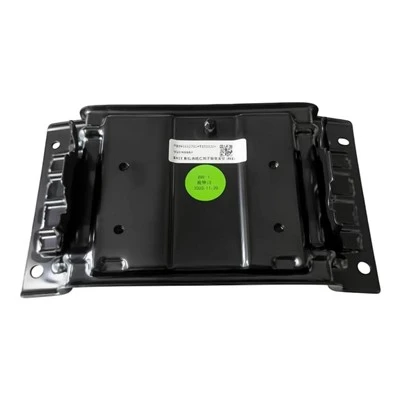
First, let’s get on the same page about what we’re talking about here. Mild steel is the workhorse of automotive manufacturing—low carbon content, usually under 0.25% by weight, which gives it that balance of strength, formability, and affordability that’s hard to beat. Aluminum, on the other hand, is a non-ferrous metal, roughly a third the density of mild steel, with good corrosion resistance, but it behaves way differently when you stamp it and weld it—two non-negotiable steps for most of the parts we make, like chassis brackets, suspension mounts, or inner door frames.
Let’s start with stamping, because that’s the first step after we design the part. Stamping is when a flat metal sheet is pressed into a specific shape using a die—think of it like shaping playdough, but under thousands of tons of force. Mild steel loves stamping. Its ductility (how much it can stretch without cracking) is just right for most standard dies. We can run high-volume stamping lines at full speed with mild steel, no need for extra heat or special lubricants that add cost. For example, a 1mm thick mild steel sheet will form a sharp bend or a complex curve without splitting, as long as we account for a little springback—when metal bends and springs back slightly after the die comes off. We can calculate that springback with simple tools, adjust the die, and get consistent parts shift after shift, even for parts that need tight tolerances for suspension brackets, where a 0.1mm difference can throw off alignment.
Aluminum stamping? That’s a whole different beast. While aluminum is light, it’s less ductile than mild steel at room temperature. Stretch it too far, and it cracks—especially in complex parts with deep draws or sharp angles. To fix that, we have to heat the sheets during stamping, which adds time and energy costs. We also have to use special dies and lubricants to prevent the aluminum from sticking, because it’s softer than steel and can gall (roughly) on die surfaces. Don’t get me wrong, we can stamp aluminum—we make plenty of inner door panels for electric vehicles that need to cut weight—but it’s not as forgiving as mild steel for high-volume runs where every second of production counts. I’ve seen a stamping line for aluminum parts go 20% slower than the same line running mild steel, just because of the extra steps needed to avoid defects.
Now the part that trips up a lot of people: welding. Welding stamped parts is where the two materials differ the most, and this is where as a stamped welded components supplier, I’ve seen way too many projects go wrong because someone picked aluminum without thinking through the welding process. Mild steel welds like a dream. It has a high melting point (around 1,510°C), and it doesn’t react easily with the air during welding—no need for special shielding gas beyond standard argon or even just CO2 for MIG welding, which is what most shops use for auto parts. We can weld mild steel fast, with minimal defects, and the welds are strong enough for any auto component that doesn’t see extreme stress. For example, a suspension mount welded from mild steel will hold up to potholes, hard turns, and years of use without the weld breaking.
Aluminum welding? That’s tricky. Aluminum has a lower melting point (around 660°C) than mild steel, which means you have to be precise with heat—too much, and it burns through; too little, and the weld is weak. Worse, aluminum has an oxide layer on its surface that’s super tough, like a thin skin of ceramic, that has to be removed before welding, otherwise the weld will have gaps and won’t hold. That means extra steps when we process aluminum parts: cleaning the sheet metal, brushing away the oxide layer, and using a special shielding gas (usually pure argon, not mixed) to keep new oxide from forming mid-weld. We also can’t use the same electrodes or welding machines we use for steel—aluminum requires equipment that’s more expensive to buy and maintain. I’ve had clients come to me wanting to switch to aluminum for their chassis parts only to back out when they saw that welding aluminum adds 30% to the cost per part, not just from materials but from the extra labor and machine time.
Let’s talk about properties that matter for auto parts: strength, weight, and durability. Mild steel has higher tensile strength than most commercial grades of aluminum—meaning it can pull or withstand force without breaking, which is why we use it for structural parts like chassis crossmembers, where rigidity is non-negotiable. Sure, aluminum is lighter, but if you need a part that’s going to take impact, mild steel often performs better in crash tests, because it doesn’t bend as easily and can absorb energy without fracturing. That’s not to say aluminum can’t be strong—high-grade aluminum alloys like 6061-T6 are used for things like wheel rims—but those alloys are more expensive, and they still can’t match mild steel’s strength for the same thickness.
Weight is where aluminum shines, though. For electric vehicles, every kilogram saved adds range, so switching to aluminum for non-structural parts like inner door panels or trunk lids makes a huge difference. If you’re building a compact car that doesn’t need heavy structural support, aluminum can cut 30-40% off the weight of a part compared to mild steel. But you don’t want to use aluminum for parts that are close to the frame, because the extra cost and weaker welds aren’t worth the weight savings.
Durability and corrosion resistance: Aluminum wins here, no question. Mild steel rusts—badly—if it’s not coated. That’s why we have to add a coating like zinc plating or powder coating to most mild steel parts, which adds cost and a step to the process. Aluminum forms a natural oxide layer that seals the surface, so it doesn’t rust, even when exposed to rain, road salt, and other elements. That’s why aluminum parts often last longer in regions with harsh winters where roads are salted. But again, that natural oxide layer we mentioned earlier? It’s a problem for welding, so you have to balance the corrosion benefit with the welding headache.
Now, let’s talk about production costs, because that’s a big factor for auto manufacturers who are running thousands of parts a month. Mild steel is way cheaper per pound than aluminum—right now, mild steel sheet metal costs about half what aluminum does. Add to that the easier stamping and welding process, and a mild steel part is usually 20-40% cheaper than an equivalent aluminum part, depending on the size. For high-volume runs of 10,000 parts or more, that adds up to big savings. Aluminum’s lower material cost per kilogram doesn’t make up for the higher per-pound price and the extra processing steps. I had a client last year who switched all their brackets to aluminum to save weight, only to realize their production costs jumped 28%—a number they couldn’t pass on to consumers, so they switched back to mild steel after six months.
Wait, but what about hybrid uses? A lot of modern cars mix both materials, right? You see a mild steel chassis with aluminum hoods and doors. That makes sense—use aluminum for parts where weight matters and cost isn’t a dealbreaker, use mild steel for structural parts where strength and low cost are key. As a stamped welded components supplier, we’ve mastered both, but we usually recommend mild steel first for most standard parts, and only suggest aluminum if the client has a specific weight requirement for an electric vehicle or a luxury car where weight is a priority.
Let me share a couple of real examples from our shop to make this concrete. Last quarter, we got an order for suspension control arms for a compact SUV. The client initially wanted aluminum to cut weight for fuel efficiency. We ran a test weld and stamping, and found that the aluminum version would cost 35% more per part, and crash tests showed that it bent 12% more than the mild steel version under impact. We suggested a mild steel version with a thin zinc coating, which met all the client’s performance requirements and came in 28% under their budget. They ran that order for 50,000 units, and we’ve gotten repeat business since.
Another example: last year, a startup EV company wanted inner door panels that were 20% lighter to boost range. We stamped 1mm thick aluminum panels, worked with their engineering team to adjust the die to reduce cracking, and switched our welding process to a pulsed MIG welder that prevents burn-through. The panels ended up being 22% lighter than the mild steel ones they originally planned, and their weld quality met all their testing standards. It was a win for both sides, even though the aluminum panels cost more, because the weight savings justified the extra cost for their EV model.
So what’s the core difference, when you strip it all down? It comes down to priorities. If your top goals are low cost, high volume, and strength for structural parts, mild steel is the clear choice. If your top goals are weight savings, corrosion resistance, and you can absorb the higher cost for non-structural parts, aluminum is a good fit. There’s no one-size-fits-all answer, and that’s why as a stamped welded components supplier, we don’t push one material over the other blindly—we work with our clients to figure out what their parts actually need.
A lot of newer manufacturers, especially those getting into electric vehicles, get fixated on aluminum as the “lightweight” solution without thinking through the tradeoffs in production, cost, and weld reliability. We’ve helped several startups avoid that mistake by running small test batches of both materials, showing them what works for their specific parts, not just the trend of the moment. That’s the value of working with a supplier that actually has experience stamping and welding both materials, not just quoting a price.
At the end of the day, auto components aren’t just about the material—they’re about how that material performs through every step of production, and how it holds up for years on the road. We’ve built our business on understanding those tradeoffs, and helping our clients pick the right material for their parts, not just the one that sounds like the best choice on paper.
If you’re working on a new model, updating an existing part, or trying to work through a challenge with stamped welded auto components, we’re here to help. Whether you’re considering switching materials, adjusting your production process, or just need a quote for a new part, reach out to us to discuss your requirements.
Farm Implement Metal Parts References:
- Automotive Materials Partnership LLC. (2021). Lightweighting in Automotive: Materials Selection, Tradeoffs, and Performance. U.S. Department of Energy.
- Davis, J.R. (2005). Aluminum and Aluminum Alloys. ASM International.
- Lange, K. (1985). Handbook of Metal Forming. McGraw-Hill.
- Lincoln Electric Company. (2019). Welding Guidelines for Automotive Components. Lincoln Electric Holdings, Inc.
- Society of Automotive Engineers (SAE). (2020). Material Properties for Automotive Structural Components. SAE International.
Suzhou Yehe Precision Stamping Co., Ltd.
With abundant experience, we are one of the most reliable auto stamped welded components manufacturers and suppliers in China. We warmly welcome you to buy customized auto stamped welded components at competitive price from our factory. If you have any enquiry about quotation, please feel free to email us.
Address: No.5, Beifang Road, Changshu City, Suzhou, Jiangsu Province, China.
E-mail: szyh06@yehejingmi.com
WebSite: https://www.yehe-precision.com/
