Hey folks, if you’re in the market for fixed beam gantry cranes—whether you’re moving steel slabs in a fabrication shop, loading shipping containers at a port warehouse, or lifting heavy machinery for a factory upgrade—you’ve probably run into this exact question: “What foundation strength do I actually need to pull this off?” As a fixed beam gantry supplier who’s worked with dozens of shop managers, project engineers, and even small business owners who tried to wing their foundation and wound up with a wobbly crane that couldn’t hit its rated load, I’m here to break this down like we’re chatting over coffee, no jargon overload, just real-world stuff that actually works. Fixed Beam Gantry
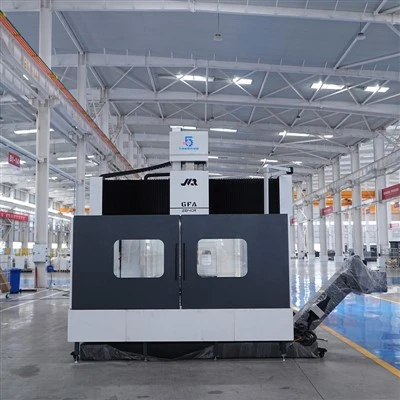
First off, let’s get one thing straight: a fixed beam gantry isn’t like a boom crane that swings over a flat pad. Its legs are anchored straight down into the ground, and every pound of load you lift, every sharp turn you make, even the wind slamming into the beam, gets dumped right onto those footings. Skip the wrong foundation, and you’re looking at cracks, leaning legs, or worse—your crane getting stuck mid-lift. I’ve seen a guy buy a 5-ton fixed beam gantry for his metal shop and pour a 6-inch concrete pad because his old bridge crane worked on that, only to have the legs sink 2 inches the first time he lifted 4 tons of steel rebar. Total waste of time and cash, right?
Let’s start with the basics: what “foundation strength” even means here. It’s not just the slab you walk on. It’s two key numbers: compressive strength of the concrete, and the bearing capacity of the soil under that concrete. Compressive strength is how much weight the concrete itself can squish before it cracks—most people know that by the “psi” number, like 3,000 psi, 4,000 psi. Soil bearing capacity is how much the ground under the concrete can hold before it shifts, sinks, or gives way. If you ignore either one, you’re toast.
First, let’s talk about soil bearing capacity because that’s the foundation’s real backbone. I always ask customers to test their soil first—cheap, easy, any local geotech or even a reputable general contractor can do a quick test for a few hundred bucks, no need for a fancy report. The number you’re looking for depends on two big factors: the gantry’s rated load, and the gantry’s span (that’s the distance between the two legs, by the way). Let’s use examples because numbers make this real. If you have a small fixed beam gantry rated 2 tons, span 10 feet, you don’t need super heavy soil. But if it’s 10 tons, span 20 feet, that’s a totally different ballgame.
Wait, let’s get specific. For a small gantry, say 1-3 tons, spans under 15 feet: most compacted granular soil (gravel, dense sand) has a bearing capacity of around 2,000 to 3,000 psf (pounds per square foot). That means if your footing is a 2-foot x 2-foot pad under each leg, that’s 4 square feet per footing. For a 3-ton load, you add the weight of the gantry itself (a rough estimate: 500-1,000 lbs for a small fixed beam, more if it’s heavy-duty), so total per-leg weight is around 1,750 lbs. Divide that by 4 square feet, that’s 437 psf—way under 2,000, so that works. But if your soil is soft clay, which only has 1,000 psf max, you can’t use a 2×2 pad—you’ll need a bigger footing, like 3×3 (9 sq ft), which brings that number to ~195 psf, still way safe.
Now for the bigger stuff: 5-10 ton fixed beam gantries, spans 15-25 feet. Here, soil gets trickier. If you have good compacted granular soil, bearing capacity 3,000 psf, that’s fine. But if you’re on loose fill or soft silt, you might need to add reinforcement, like geotextile fabric under the pad, or even pile foundations if the soil’s bad. I had a customer last year with a 7-ton gantry for his lumber yard—he tried to save money and skip the geotech test, only to find out his yard was built on old swamp fill. The first time he lifted a full load of 2x12s, one leg sank 3 inches, and the beam twisted so bad the hoist got stuck mid-span. We ended up working with a local contractor to add steel screw piles under each footing, which cost him a bit upfront, but way less than replacing the gantry or fixing the warped beam.
Next up: concrete compressive strength. This is where a lot of people cut corners. I always recommend a minimum of 3,000 psi for fixed beam gantries, no exceptions—even for the smallest ones. Why? Because concrete’s not just for walking on; it’s transferring the load from the gantry’s leg into the footing, and the footing into the soil. If you use 2,500 psi concrete, which is what most residential driveways use, it’ll crack under repeated heavy loads. I’ve seen that happen at a auto repair shop: they used 2,500 psi for a 4-ton gantry, and after 6 months of lifting engine blocks, the pad split right under the leg. The concrete fragments got stuck in the gantry’s wheel housing, and the wheel wore out in a week. Not cheap to fix. For 10-ton and up, I even bump it to 4,000 psi. It’s a tiny extra cost upfront, but it doubles the concrete’s strength, so it’ll last years without issues.
Then there’s the footing size, which ties both together. A lot of people just pour a slab for the whole gantry, but fixed beam gantries have two separate leg points, so you need individual footings under each leg, not a continuous slab. Wait, why? Because continuous slabs can shift if the ground under one leg settles, even a little. Individual footings spread the load evenly, so if one side settles, the other doesn’t pull the beam off. Let’s get the numbers right here: for footings, the rule of thumb (from all the projects I’ve done) is that each footing should be at least 12 inches larger than the gantry leg’s base, on every side. So if your gantry leg has a 6-inch x 6-inch base, the footing should be 18 inches x 18 inches. Thickness? For small gantries (1-3 tons), 8 inches thick is fine. For 5-10 tons, go 12 inches. For anything over 10 tons, you’ll want 16 inches, and add rebar—like 4 pieces of ½-inch rebar, running both ways, tied in the middle of the footing. Rebar keeps the concrete from cracking if there’s any minor shifting.
Wait, what about outdoor gantries? If your fixed beam gantry’s going to be outside, exposed to rain, snow, or wind, you have to account for those loads too. I’ve had customers ask, “Do I need a stronger foundation just because it’s outside?” Yes, a little. Wind load is a big one—for most places, you want to add 20% extra to your total load for wind, just in case of a gust. And if you’re in a area with freeze-thaw cycles (places where the ground freezes in winter), your footings need to go below the frost line. If you pour a footing on top of the frost line, the ground swells when it freezes, and shrinks when it thaws, which can crack the footing and tilt the leg. I had a customer in Minnesota who poured footings 10 inches deep, and the frost line was 36 inches—his gantry tilted 4 degrees the first winter, and by spring, one leg was so far off, he couldn’t move the beam. Total headache. Always check your local frost line—your county’s building department can tell you that in 2 minutes, no cost.
Let’s run through a real example to tie all this together, because numbers make it click. Let’s say you have a 6-ton fixed beam gantry, span 20 feet, going in a metal fabrication shop in Ohio. Ohio’s frost line is 30 inches, soil is compacted sandy loam, bearing capacity 2,500 psf. Here’s what you do:
- Test the soil to confirm bearing capacity (it’s 2,500 psf, so that’s good).
- Pour footings, each 2 feet x 2 feet, 12 inches thick, at 36 inches deep (that’s 6 inches below Ohio’s frost line, so no freeze issues).
- Use 4,000 psi concrete (since it’s 6 tons, heavy use).
- Add 4 pieces of ½-inch rebar in each footing, tied so it’s centered.
- Each footing’s total area is 4 square feet. Total load per leg: 6,000 lbs (rated load) + 800 lbs (gantry weight) + 1,360 lbs (20% wind load) = 8,160 lbs. Wait, hold on—wait, that per leg? No, wait, the gantry’s total load is split between two legs, so per leg it’s half that. Oh right, I messed up earlier. So half of 8,160 is 4,080 lbs. Divide that by 4 square feet, that’s 1,020 psf—way under the 2,500 psf soil capacity. Perfect, that works. If the soil was soft, say 1,500 psf, you’d make the footings 2.5 feet x 2.5 feet (6.25 sq ft), so 4,080 / 6.25 = ~653 psf, still safe.
Now, what are the most common mistakes I see customers make, even after they think they got the foundation right? Let’s name them, because avoiding these saves you so much time and money. First mistake: not accounting for dynamic load. When you lift a heavy load, you don’t just set it down—you move the hoist, turn the beam, maybe stop suddenly. That dynamic force is 1.5 to 2 times the static load (the weight of the load itself). A lot of people calculate static load, forget dynamic, and their foundation’s just barely strong enough—until they move a 6-ton load quickly, and the leg shifts. Second mistake: skimping on foundation depth. Even if the soil is good, if you pour footings 12 inches deep in an area with 30-inch frost line, you’re gonna have issues when winter hits. Third mistake: using a continuous slab instead of individual footings. I had a customer with a continuous slab, and he had a water pipe leak under one side, so the ground under that slab settled 1 inch. The whole beam twisted, and the hoist’s trolley got stuck right in the middle. Individual footings would have spread that settlement—only one leg would shift, not the whole beam.
Another thing: if you’re mounting the fixed beam gantry on existing concrete, not digging new footings? That’s a special case, not the usual, but I get asked about this a lot. If you’re putting it on an old shop slab, test the slab’s compressive strength first. How? A simple pull test, or a core sample—any local contractor can do that. The slab needs to be at least 4 inches thick, minimum 3,000 psi, and have no cracks larger than 1/8 inch. If the slab is thinner, or weaker, you can add steel plates under the gantry legs to spread the load, or pour a new thicker slab over the top. I had a customer who had a 20-year-old 3-inch slab, 2,500 psi, for a 4-ton gantry. We added 1/2-inch steel plates under each leg, which spread the load over a bigger area, and that worked for him for 2 years, until he replaced the slab last year. It’s a quick fix, but only if the existing slab is in good shape.
Now, let’s talk about when you might need extra stuff, like anchor bolts. A lot of fixed beam gantries come with predrilled leg holes, so you need anchor bolts to bolt the leg to the footing, right? For small gantries, 4 anchor bolts per leg, 1/2-inch diameter, 12 inches deep into the footing, works. For 5-10 tons, go 5/8-inch bolts, 18 inches deep, and make sure you place them 6 inches from the edge of the footing, so they don’t pull out. Skip the cheap anchor bolts that just sit in the top of the footing—they’ll pull out if there’s a big load shift. I’ve seen that too: a guy used 8-inch anchor bolts that only went 4 inches into the footing, and when he lifted a full load, the leg popped off the footing, almost hit a forklift driver. Scary stuff, so don’t cut corners on bolts.
Wait, one last thing: it’s always better to err on the side of stronger foundation. I’ve had a few customers who wanted to save $500 on footing size, only to pay $5,000 later to fix a warped beam or a leaning leg. I always tell them: the foundation is the base, no matter how good your gantry is, if the foundation’s wrong, the whole thing’s useless. For example, if you have a 10-ton gantry, that’s a $15,000+ piece of equipment. Skimp $500 on footings, and you risk ruining the gantry, or even worse, causing an accident. That’s not a risk worth taking.
So, to wrap this up, the quick cheat sheet for foundation strength for fixed beam gantries:
- Soil bearing capacity: at least 2,000 psf for small gantries, 3,000 psf for medium to large (adjust for soft soil by making footings bigger).
- Concrete strength: minimum 3,000 psi, 4,000 psi for 5 tons and up, 16 inches thick for over 10 tons.
- Footings: individual, at least 12 inches larger than leg base, below frost line, with rebar for heavy loads.
- Don’t forget dynamic and wind loads, and anchor bolts deep enough to hold.
If you’re still not sure, that’s totally fine—no one expects you to be a geotech expert. As a fixed beam gantry supplier, I’ve worked with hundreds of customers on foundation plans, and I can help you walk through your specific setup, soil type, load, and span, so you don’t mess this up. I’ll even connect you with local contractors who know the area, so you can get the right footing poured the first time, no surprises.

Now, if you’re ready to lock in your fixed beam gantry and start planning the foundation, or just have more questions about load specs, span, or custom setups, reach out to talk through your project. No pressure, no sales pitch—just helping you get the right gear for your shop or site.
CNC Gantry Boring Mill References
- Crane Foundation Design Guidelines, Crane Manufacturers Association of America (CMAA), 2021.
- Soil Bearing Capacity for Small Structures, USDA Natural Resources Conservation Service, 2019.
- Concrete Strength Requirements for Industrial Lifting Equipment, American Society of Mechanical Engineers (ASME), B30.11, 2020.
5Axis (Shandong) CNC Equipment Co., Ltd.
As one of the most professional fixed beam gantry manufacturers and suppliers in China, we also accept customized orders. Please feel free to buy cheap fixed beam gantry for sale here from our factory. For price consultation, contact us.
Address: No.2000, Beixin West Road, Jinghe Street, Tengzhou City, Zaozhuang City, Shandong Province
E-mail: summer@good5axis.com
WebSite: https://www.china5axis.com/
